
[ad_1]
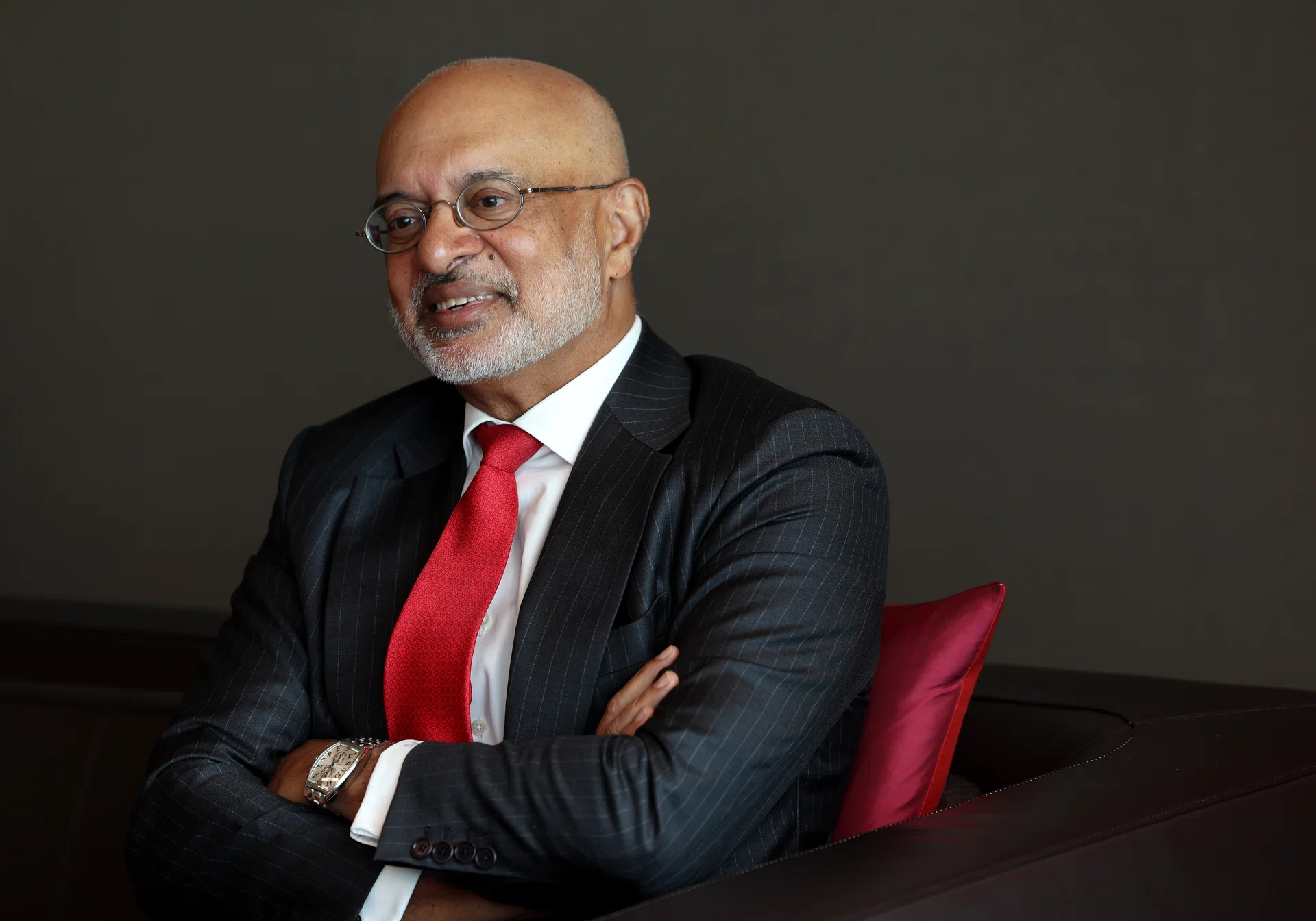
[SINGAPORE] Blended finance and carbon markets are the two main financing mechanisms that could channel capital from developed countries to emerging markets, and help lower their decarbonisation costs, said DBS former chief executive officer Piyush Gupta.
Driving down the costs of financing is crucial to scale energy transition in emerging markets, as projects in these economies are typically not bankable, said Gupta, who is also the chairman of Singapore Management University.
Speaking in a panel organised by the university on Tuesday (Aug 26), he said that with blended finance, governments in developed markets – through their donations to multilateral agencies – can provide capital to emerging markets more indirectly.
It would not be the same as the climate finance commitment developed countries are obligated to provide for developing countries under the Paris Agreement; those are direct grants or loans, which would likely be less palatable to voters in the developed world.
Under the Paris Agreement, developed countries are required to provide at least US$100 billion a year until 2025. The new quantum of US$300 billion was the headline number countries were tussling over at the United Nations climate change conference (COP29) held in Baku, Azerbaijan, last year.
Gupta said: “It’s very hard for any developed country to put into the budget. Can you imagine you’re sitting in Germany, you get elected and say: ‘I am going to sign a $10 billion check to Myanmar’. It’ll never happen. So it is why the official channels of flows are highly unlikely to happen.”
A NEWSLETTER FOR YOU

Friday, 12.30 pm
ESG Insights
An exclusive weekly report on the latest environmental, social and governance issues.
However, capital from developed markets, when channelled through multilateral agencies participating in blended-finance programmes, are one level removed, said Gupta.
Blended finance is a capital-raising approach that leans on investors with higher risk appetites, such as multilateral development banks, development finance institutions, philanthropists or governments, to provide the concessional or catalytic capital that pulls in more commercial investors.
“That still requires a lot of political will in the (Global) North, but because it is one step removed, it’s not ‘in your face’ for the voters,” said Gupta.
“So for the shareholders and providers of capital, the developed world could actually be able to support multilateral agencies and let them guarantee – and therefore lower – the cost of financing for renewable and sustainable projects in the (Global) South,” he added.
As for carbon markets, Gupta said having a carbon price and the right policy support are important components to get it working effectively.
“So when you do that, a large number of the solutions for carbon capture, carbon abatement, deforestation, nature-based solutions are all in the (Global) South. And therefore, you create a market-driven mechanism for money to flow from the North to the South,” he said.
While it is important for the Global North to bear responsibility for historically emitting the most and causing the climate crisis, Damilola Ogunbiyi, Special Representative of the UN Secretary-General for Sustainable Energy for All, said that the developing world actually has the resources to help itself.
Ogunbiyi, who was also among the panellists on Tuesday, said emerging markets need to utilise money and subsidies better, and engage with their local capital markets more.
“You also have to look within your only local resources and say that: ‘Yes, debt crisis and everything, but can I use my resources better for these issues that I have on ground that directly affect my people and affect my environment?’
“I do not think the Global North is the saviour of the Global South at all. It has never happened, and it’s never going to happen. We have to save ourselves, and we have to do what is good for our population,” she added.
Echoing her sentiment, Rajiv Lall, a professorial research fellow at SMU’s Singapore Green Finance Centre, said that the best way to crowd-in private capital is for governments in emerging markets to make the right policy choices to reduce the risk of investing for investors.
He said that China and India have made progress on this front, but that South-east Asia is a laggard.
“We cannot make (blended finance) the bread and butter of climate finance; it can only be a catalyst to crowd-in private capital,” he added.
[ad_2]
Source link