


For free real time breaking news alerts sent straight to your inbox sign up to our breaking news emails
Sign up to our free breaking news emails
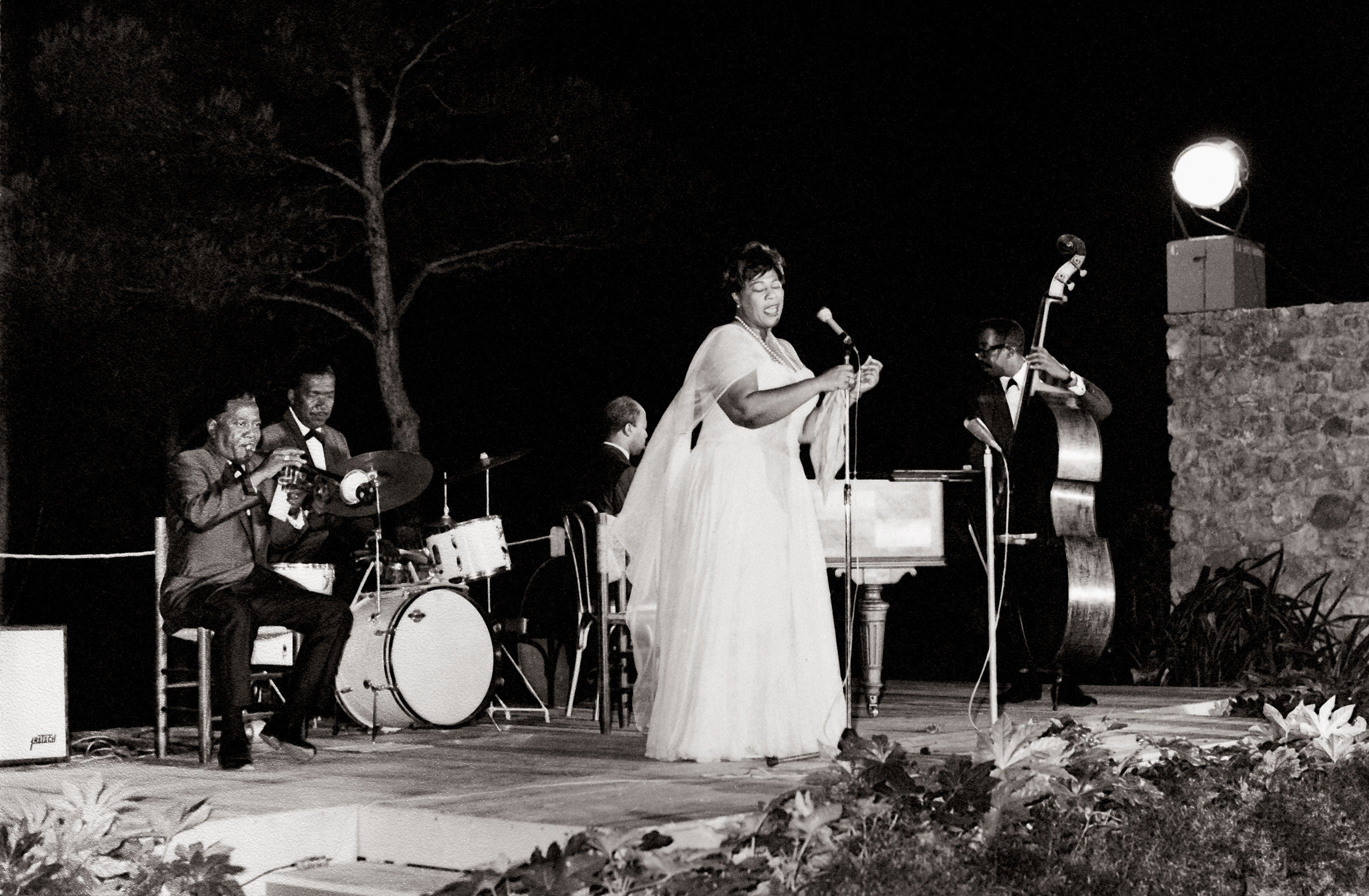
On a sun-drenched hilltop above the medieval village of Saint-Paul-de-Vence in the south of France, there’s a space where you can see works by the great 20th-century modern artists like Chagall, Giacometti, Miró, Kandinsky, Calder and Braque outside of monolithic national galleries, in their natural habitat. Here sits the Maeght Foundation, which many of the artists helped to create. At its 1964 grand opening, jazz great Ella Fitzgerald sang. This summer, it celebrates its 60th birthday with two new grand openings: a blockbuster exhibition and a stunning extension, hacked out of the rocks beneath the original building, with glass fronts looking out onto steep, pine forests like a Bond villain’s lair. And it’s still a family affair.
The late gallerists and lithographers Marguerite and Aimé Maeght decided to build the foundation on the same plot as their family home, partly on the advice of Georges Braque. They had lost their youngest son, Bernard, to leukaemia in 1953, and the pioneer of Cubism suggested they embark on something bigger than themselves to help get through the pain. Their extended family of artists chipped in: Miró dreamt up a sculpture-filled labyrinth in the garden; Giacometti designed the benches, light fittings, door handles and café chairs; Braque conceived a fish mosaic for a tranquil pond, along with a stained-glass window for the chapel, reconstructed from ancient ruins found when excavating the site. When you pass through the gates of the foundation, you feel as though you’ve stepped through a portal into the artists’ playground.
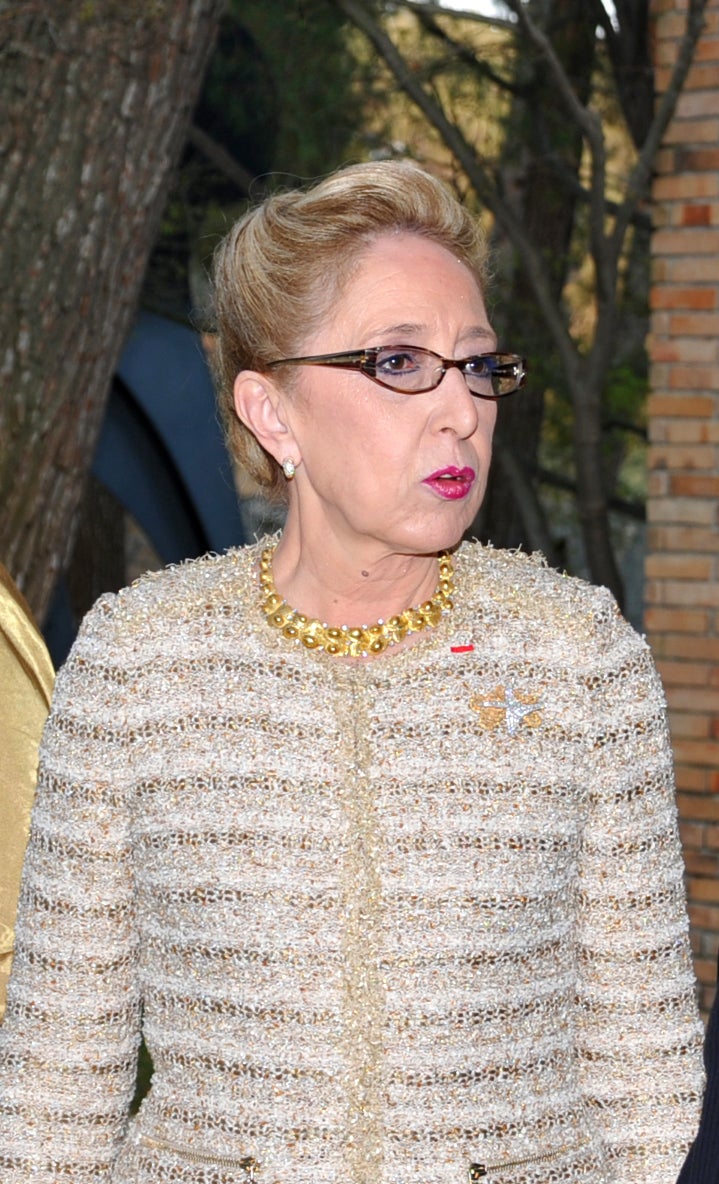
For Marguerite and Aimé’s granddaughter, Isabelle, this was her childhood playground. “From the moment the foundation closed, it was our house, it was our garden,” she recalls. We are sitting in the foundation’s library, in what used to be a guest house but now serves as administration offices, where Isabelle is giving interviews fuelled by a steady stream of espresso and cigarettes. “We played with the children of [Spanish sculptor Eduardo] Chillida, the grandchildren of Miró… we were a band of 20 children. It was fantastic.”

The new exhibition – Matisse-Bonnard, a Friendship – is pertinent to the family’s start as gallerists, because Marguerite and Aimé Maeght were great friends with both of these artists at the time. They began selling Bonnard’s work at their homewares shop in Cannes during the war, at first unaware of his standing as an artist. When Aimé learnt that the authorities were onto him for using his printing skills to falsify papers to move Jewish people out of occupied France, Bonnard sent him up to his friend Matisse in the hills where no one would find him. “Bonnard found with Aimé,” says Isabelle, “a kind of son and also a very good lithographer.” Bonnard took young Maeght under his wing – and, after the war, to Paris to help him establish his first proper gallery.
This summer the foundation will be showing intimate home videos of Matisse and Bonnard made by Isabelle’s father, Adrien Maeght, still chair of the board of trustees at 94. “We have letters from Bonnard and from Matisse,” says Isabelle. “We have movies; my father made a movie of Bonnard – the only one in the world – and a movie of Matisse working. It was not a documentary. It was not professional. He was 14 and just asked Matisse, ‘May I put my camera here while you’re making a portrait of my mother?’ ‘Yes.’”
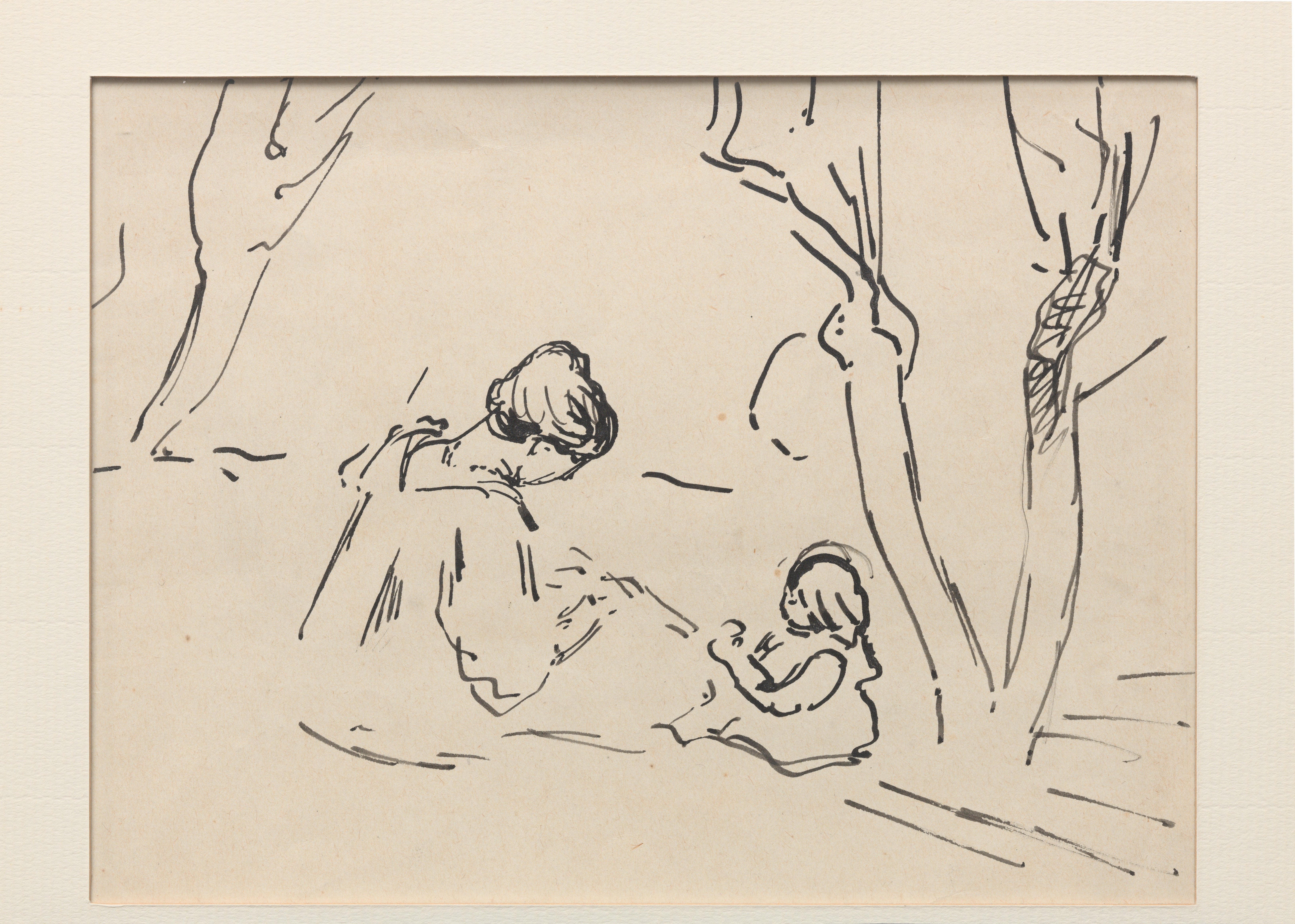
Works from the family collection will be on display, too, including one of Bonnard’s fan paintings along with “some sweet drawings from Bonnard, very sweet, never shown… my father with a cat, my grandmother under a tree, a portrait of my grandmother by Matisse. You see, very sweet, personal things.”
Of course, this beautiful dreamy world isn’t perfect – nothing is. When I mention one of Isabelle’s two sisters, Yoyo, I am told, “She is out of the family, for the moment.” And the seemingly effortless glamour of the foundation is hard work to maintain. Director Nicolas Gitton gives me a guided tour in late May, when everything is far from pristine. The new rooms and the landscaping around them aren’t completely finished; storms have washed debris from the rainwater-harvesting roof into the decorative ponds; the sky isn’t flawlessly azure; and – much to Gitton’s irritation – there is a rogue watering can hiding behind the chapel door. He photographs it with his phone to remind him to reprimand the gardener later. Not that I’d have noticed; I was too busy admiring the stained glass and the vast 12th-century crucifix – a present from the late Spanish fashion designer Cristóbal Balenciaga. But Gitton is working for the Maeghts, who are clearly sticklers. “We must try to show to the public it’s perfect,” says Isabelle. “I don’t want to have a piece of paper on the ground. I can’t.”
The artist Isabelle was closest to as a child was Braque. “He was like a third grandfather; I loved him,” she says. The family went to visit him every Friday, but she was the only child allowed into his studio, and to play Erik Satie’s piano in his living room. “He was lovely,” she recalls. “He seemed so big, so elegant. He loved me, and when he died, he said to his wife that I must be at the funeral. I was eight years old. It was unbelievable to me that Braque could be in the box. But I was there, and it was a national funeral.”
Despite this idyllic childhood among legendary artists, she says “nostalgia is not a good thing”. These days she mostly works with contemporary artists at the Maeght commercial gallery in Paris, which is, she says, “completely separate”. I wonder how growing up among all of this has shaped Isabelle’s own philosophy. “Love, love, love,” she says. “Only to love art.” And Braque taught her that art and life are one, all of which has fostered a lifelong curiosity. “Look around you in the city,” she says. “A small thing on a building – the colour of a door, a small window – makes it great. I learned to look, to appreciate a flower, a wall, a book. My philosophy is to look, to be interested in everything. Everything. And like that, every day there is something new, a new way to understand, to go on, to grow up.”
A friend of her mother collects cobwebs. She douses them with hairspray and catches them between two pieces of glass. “It’s like diamonds,” says Isabelle. “Diamonds! So it’s art. She has about 50. Can you imagine she is going in the forest with glass? Crazy, but it’s fabulous. Everything is art.” She worries, when she sees visitors at the Louvre, that they’re rushing through it all rather than stopping and really looking at a few paintings. People get hung up on knowing about the art-historical context, I say. She rolls her eyes in despair at so many people missing the point. “I don’t care. I don’t care!”
Aimé Maeght was an enthusiastic ideas man, who was easily carried away. After seeing Disney’s Fantasia, he wanted to create something similar with Matisse, but his friend gently but firmly steered him away from the notion. Marguerite, similarly, reined him in when necessary. “My grandfather had 10 ideas in a minute,” says Isabelle. “Sometimes my grandmother said yes, or sometimes: ‘Aimé, non.’ And that’s it. It was over. He would never have done the foundation without my grandmother, or my father and my mother. Because everybody works together.” So she grew up with great female role models? “Absolutely,” she laughs, throatily.
And there weren’t only male artists around as she grew up, she says. “Germaine Richier, Joan Mitchell, we have a lot of women… Barbara Hepworth – we’re planning an exhibition with her next year,” says Isabelle of the late British sculptor. “I love this artist.” Being independent, she says, allows the foundation to show whoever they want. “Barbara Hepworth is absolutely unknown in France. We don’t care if an artist is very famous or not. We love this work? This piece? We will show it. We want to show our visitors what the other museums don’t show,” she shrugs. “We don’t have a lot of money from the state, but it’s the price of freedom.”
The extension was needed so that enough of the permanent collection of more than 13,000 works could remain on display at the same time as temporary shows. They found Italian architect Silvio d’Ascia in a way that seems typical of the family: he was introduced to Isabelle Maeght by the son of Spanish artist Eduardo Arroyo Rodríguez. D’Ascia’s plans were simple. “He says we don’t have to add: we have to remove,” Isabelle says. Arroyo set about leaving the original building by Catalan architect Josep Lluis Sert (who also made the Miró Foundation in Barcelona) seemingly untouched, including the terracotta-tiled Giacometti terrace. It sits directly above the new part, with its vast spindly figures stalking about magnificently. “It’s exactly the same,” I hear one excited family exclaim to each other as they pace up and down in wonder.