

Cranes hover above Saadiyat Island as the Guggenheim Abu Dhabi moves toward completion. In Thailand, Dib Bangkok added another institutional node to Southeast Asia’s expanding art landscape. And the Art Mill Museum in Doha will open its doors in 2030, signaling a long-term cultural horizon. Meanwhile, the Museum of Fine Arts, Boston, has announced job cuts, the National Gallery in London has launched a voluntary exit scheme and MUSAC in León has seen its collecting and exhibition budgets shrink dramatically since its inception. The question is no longer whether the art world is expanding, but under what conditions institutions can sustain themselves and at what pace. The global art system is entering a structural shift in which cultural authority is shaped by uneven speeds of consolidation and retreat.
When the center loses momentum
In the United States, museums have long been funded by a hybrid model that was part philanthropy, part corporate sponsorship, part ticket revenue. That flexibility once appeared to be a strength. It enabled institutions to expand collections, mount blockbuster exhibitions and cultivate global audiences. But it also left them exposed to economic and political volatility. Federal arts funding remains comparatively modest and private donors can shift priorities quickly.
Since President Trump took office, one-third of American museums have lost government grants or contracts, exacerbating an already fragile financial landscape in which more than a quarter of institutions report being worse off than in 2019. The effects have reached major museums, including Boston’s MFA, SFMOMA, the Kennedy Center, the Guggenheim, the Berkeley Art Museum and Pacific Film Archive and the Contemporary Art Museum St. Louis.
Regarding the financial precariousness of museums built primarily on private philanthropy, as is particularly the case now in the U.S., Dr. Georgina S. Walker, author of The Private Collector’s Museums: Public Good versus Private Gain, told Observer that “the recent period of rapid private museum building has fundamentally altered what is understood to be ‘a museum’ and the relevance of an art collection, and thus, maintaining personal collections and museums intact, and in perpetuity, has become less of a focus than it has been in the past.” She added that this situation is “due to the volatility of individual initiatives and sheer number of art projects that have materialized since the early 2000s.”
The pressures are not confined to the United States. In the United Kingdom, cultural funding has been under strain since Brexit-era budget reductions, with institutions navigating years of tightened public support. The latest episode is unfolding at the National Gallery in London, which faces an £8.2 million deficit and has launched a voluntary exit scheme, with compulsory redundancies possible if savings targets are not met, as reported by Martin Bailey in the Art Newspaper.

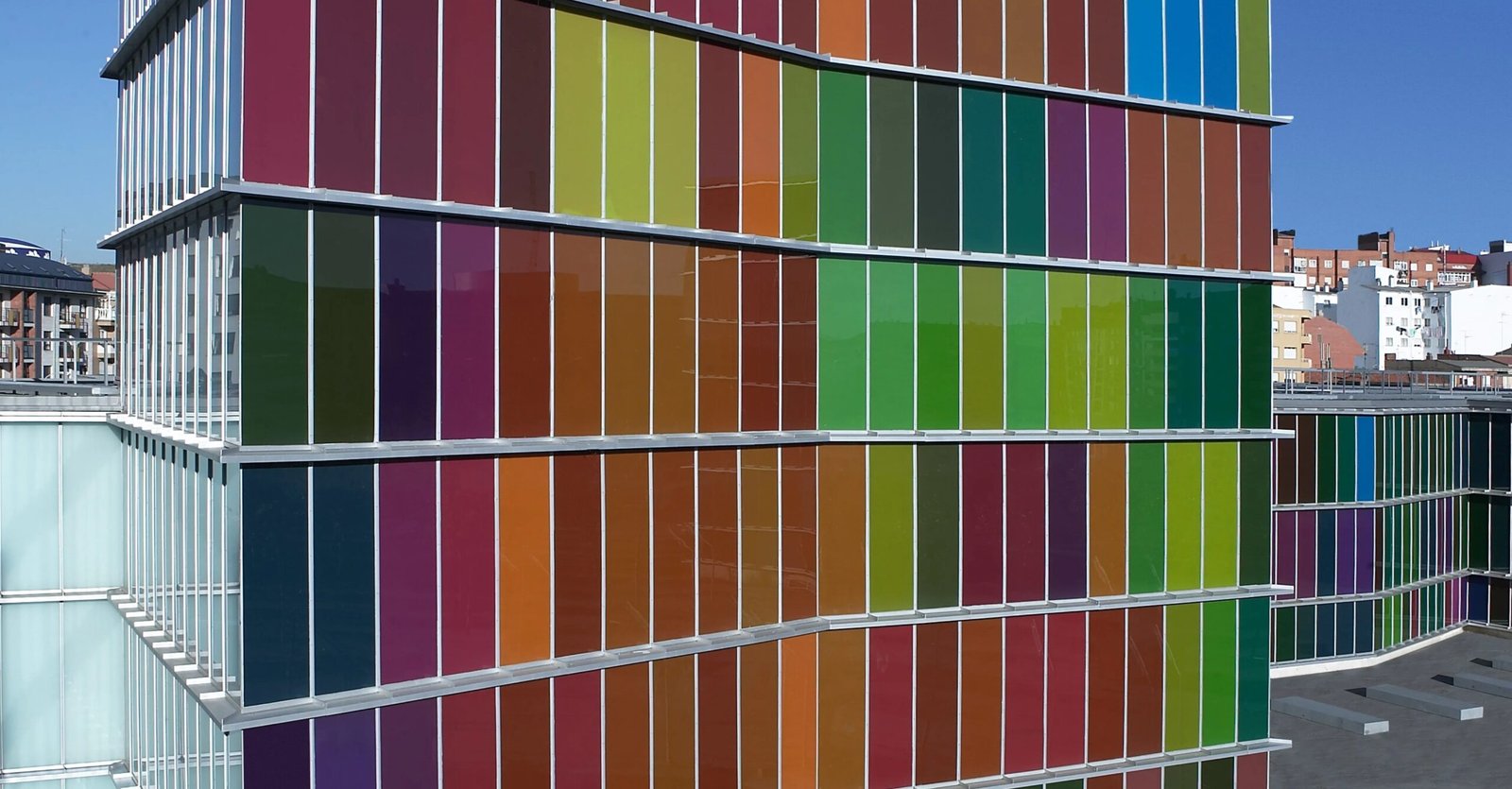
The strain extends beyond the United Kingdom. In Antwerp, the Museum of Contemporary Art M HKA was slated for dismantling as part of a broader restructuring of the Flemish cultural landscape before public backlash forced a reversal. In the Netherlands—long considered emblematic of Europe’s most generous subsidy model, especially during the 1980s—minister of education, culture and science Eppo Bruins announced in Parliament further reductions in cultural spending as part of broader budget reallocations aimed at increasing defense expenditure in response to geopolitical pressures, including the war in Ukraine. In Spain, the museum boom of the early 2000s produced landmark institutions such as MUSAC in León, inaugurated in 2005 with an initial acquisitions budget of €1.5 million. Today that figure has reportedly fallen to roughly €70,000, with some exhibitions extending for nine months at a time—a shift that reflects the narrowing operational capacity of many regional museums built during the expansionary years, including Domus Artium DA2 in Salamanca, TEA Tenerife, IVAM in Valencia and the Centro Niemeyer in Avilés.
None of this signals collapse. Western museums remain powerful, globally connected and intellectually influential. But the assumption of institutional stability—once taken for granted—is increasingly conditional. Elsewhere, the trajectory looks markedly different.
The long ascent at the margins
For other regions, entry into the global mainstream followed a different rhythm. In Latin America, consolidation took roughly half a century. From the founding of the Bienal de São Paulo in 1951—long the region’s primary international platform—to the establishment of Tate’s Latin American Acquisitions Committee in 2002, which expanded representation in major Western collections, the path to sustained institutional visibility unfolded gradually. Milestones such as the Havana Biennial, founded in 1984, and the opening of the Museo de Arte Latinoamericano de Buenos Aires MALBA by the private collector Eduardo Costantini in 2001 strengthened regional infrastructure, while commercial platforms such as ZONAMACO in Mexico City, launched in 2002, and ARTBO in Bogotá, established in 2004, signaled a parallel effort to consolidate market presence. Yet much of the validation apparatus—auction houses, blue-chip galleries and critical publishing—remained concentrated in New York, London and Paris. As visibility expanded, authority often remained elsewhere.

Pablo Helguera, artist and professor at the New School, reflected that “during the mid-20th Century, Latin American modernist artists were incorporated into international markets when their work could be aligned with dominant Western aesthetic movements. By contrast, in the 1990s, the rise of global biennial culture and postcolonial curatorial discourse shifted attention toward contextually grounded, post-conceptual practices which, together with the globalization of the art market and the expansion of institutional acquisitions and fairs, contributed to the increasing prominence of Latin American artists whose critical recognition translated into market value.”
Asia’s trajectory has been markedly faster, from the launch of the Gwangju Biennale in 1995-established in dialogue with European curatorial models and shaped early on by figures such as Harald Szeemann to the opening of M+ in Hong Kong in 2021, now widely regarded as Asia’s most significant museum of visual culture—the region consolidated institutional scale in roughly a quarter-century. A decisive turning point came in 2013 with the inauguration of Art Basel Hong Kong, which repositioned the city as the central node of the Asian art market.

This perspective is echoed by Doryun Chong, artistic director and chief curator of M+ in Hong Kong, who opined that Art Basel Hong Kong “has helped establish and cement the city’s status as the premier hub for contemporary art trades in Asia,” while also contributing to “stimulate the growth of scenes in other Asian cities, from Seoul to Shanghai to Singapore.” He also pointed to the collaboration between Art Basel Hong Kong and M+ as “a unique example of long-term commercial-non-profit partnership that is still going strong.”
A further view comes from Agnes Lin, founder and director of the Osage Foundation in Hong Kong. She argued that “the launch of Art Basel Hong Kong significantly elevated the city’s position within Asia by expanding awareness of international artists and stimulating stronger collecting interest across the region. It generated considerable energy and drew global attention, reinforcing Hong Kong’s role as a central hub in the regional art ecosystem.” Yet Lin noted the paradox that “while this transformation added dynamism, it also posed challenges for smaller galleries, which often found it harder to compete within a framework shaped by Art Basel’s strong brand identity and curatorial influence.”
The contrast becomes clearer when viewed against Australia. Despite launching the Sydney Biennale in 1973 and establishing the Asia Pacific Triennial of Contemporary Art APT in 1993—one of the earliest sustained platforms for contemporary Asian art and a key driver behind the Queensland Art Gallery’s emergence as one of the region’s most significant collectors—Australia has struggled to translate curatorial leadership into sustained global market centrality. Professor Emeritus John Clark of the University of Sydney argues that “Australia is too far away from New York-London-Paris-Basel for art market actors to come regularly, and its art market and institutional sales are too small to justify casual visits.” Early institutional initiative, in other words, did not automatically produce accelerated integration.
Compressed growth at speed
The Gulf operates at a markedly different tempo. In Doha, the opening of Mathaf: Arab Museum of Modern Art in 2010 marked the consolidation of a state-led cultural strategy. The arrival of Art Basel Qatar in 2026 signals the integration of the most influential global fair brand into the regional ecosystem. In roughly 15 years, Qatar, Abu Dhabi, Dubai and Saudi Arabia have established institutional, art market and epistemic infrastructures operating at the highest tier of the international art world.
With regard to the pace and structure of cultural development in the Gulf, particularly in Saudi Arabia, Dr. Alia Al-Senussi, who co-authored Art in Saudi Arabia: A New Creative Economy?, observed that “this began in approximately 2004-2005 with initiatives across the GCC, but the world’s attention is now on the Gulf because of the rapid acceleration in government initiatives related to art and culture, particularly in Saudi Arabia with Vision 2030.” She further noted that it is “not just a transactional moment of attention, but an ongoing dialogue … with the international art world,” suggesting that “the ancient trade routes are realigning and reigniting to recenter the world around the Gulf.”

Across the Gulf, this acceleration is constantly visible. The Louvre Abu Dhabi opened in 2017, with the Guggenheim Abu Dhabi nearing completion and Frieze Abu Dhabi set to launch in November 2026, further embedding the Gulf within the London-centered fair circuit. In Saudi Arabia, Saudi Vision 2030 has placed cultural development at the heart of national planning, from the transformation of AlUla and its partnership with the Centre Pompidou to the launch of the Diriyah Contemporary Art Biennale and the Islamic Arts Biennale held in Jeddah. In Qatar, alongside Art Basel Qatar, initiatives such as the Rubaiya Quadrennial reinforce the country’s ambition to consolidate curatorial authority as well as market presence. Museums, global fair platforms, large-scale biennials and universities such as VCUarts and NYU Abu Dhabi have emerged in close succession rather than over generations.
This is not a reinvention of the art system. The white cube, the international biennial and the global art fair remain intact. What distinguishes the Gulf is the compression of time: infrastructures that evolved gradually over generations are being assembled within an accelerated timeframe by nation-led strategies that combine soft-power diplomacy, city branding and creative cultures with identity policies.
A question of velocity
Taken together, these divergent trajectories suggest that the global art system is no longer divided simply between center and periphery, nor between established and emerging markets. It is divided, increasingly, by institutional velocity. In Western Europe and the United States, museum ecosystems, market hierarchies and cultural authority took centuries to consolidate. Latin America required roughly 50 years to secure sustained institutional integration. East Asia achieved comparable consolidation in approximately 25 years. In the Gulf, a comparable scale of institutional ambition has unfolded within 15 years.
Some regions are recalibrating long-standing infrastructures under financial and political pressure. Others are integrating into global circuits after decades of gradual recognition. And a few are implementing existing models at unprecedented speed.
Cultural authority in the coming decade may depend less on inherited prestige than on the capacity to sustain institutions through volatility. If the 20th Century was defined by accumulation—collections, archives and reputations—the next phase will be defined by tempo and by who is able to sustain it.
More in Museums
