
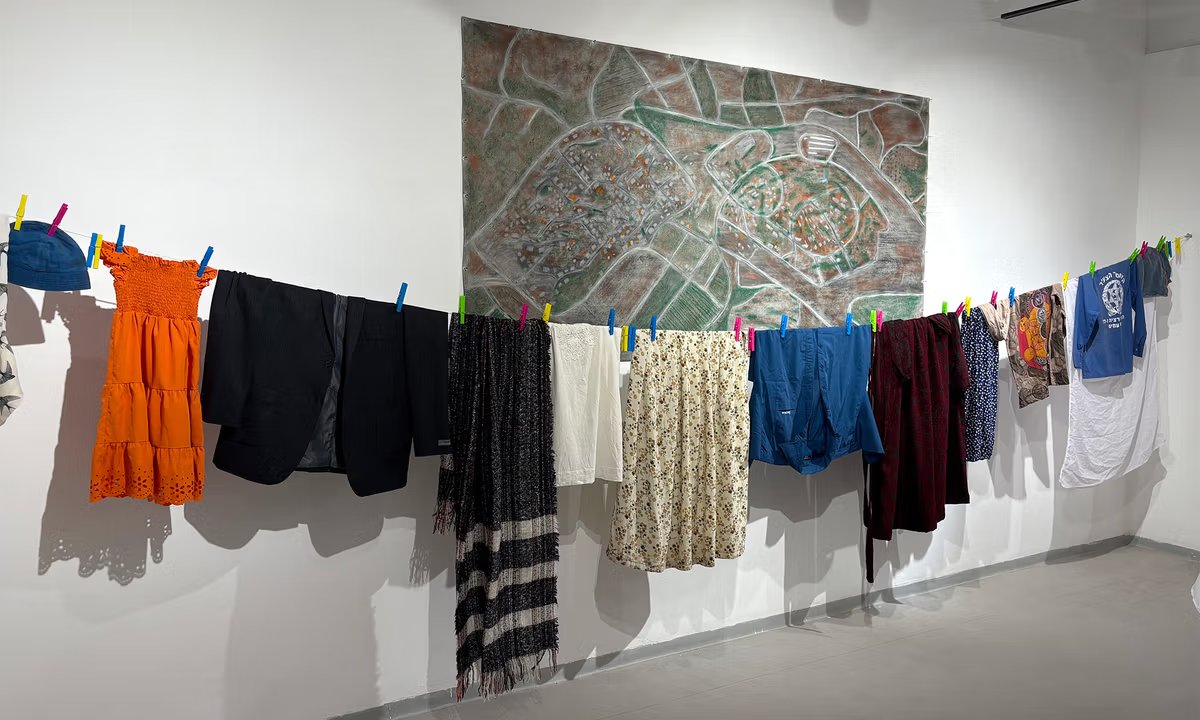
“There are people who do not know how to destroy fragments of their lives, even though they hinder their development,” the Israeli artist Dov Or-Ner wrote in typewritten instructions for a conceptual art experiment in 1972, referencing a general desire to release things from the past that no longer serve us. “What is suggested here is to become free of whatever one chooses.”
As part of a landmark Israeli conceptual art project called Metzer-Meiser situated along the seamline of Kibbutz Metzer and the Arab village Meiser between June and October 1972, Or-Ner asked residents of both communities for personal items they were ready to shed, and buried them together as specimens to be unearthed at some future point. Meanwhile, three other artists carried out other actions linked to these neighbouring towns.
The painter and sculptor Moshe Gershuni photographed Kibbutz Metzer and then hypothetically parcelled plots of land among kibbutz members—foreshadowing the privatisation of the socialist kibbutzim decades later. Avital Geva, a sculptor interested in art and the kibbutz (and whose father was the architect of Meiser’s mosque), scattered thousands of scrapped books along the path between the two communities, inviting people to collect books they wanted. The most widely covered project was Exchange of Earth, Metzer-Messer by the sculptor Micha Ullman, who dug two identical pits at the centre of each community with the help of local youngsters, transferring soil from one to the other.
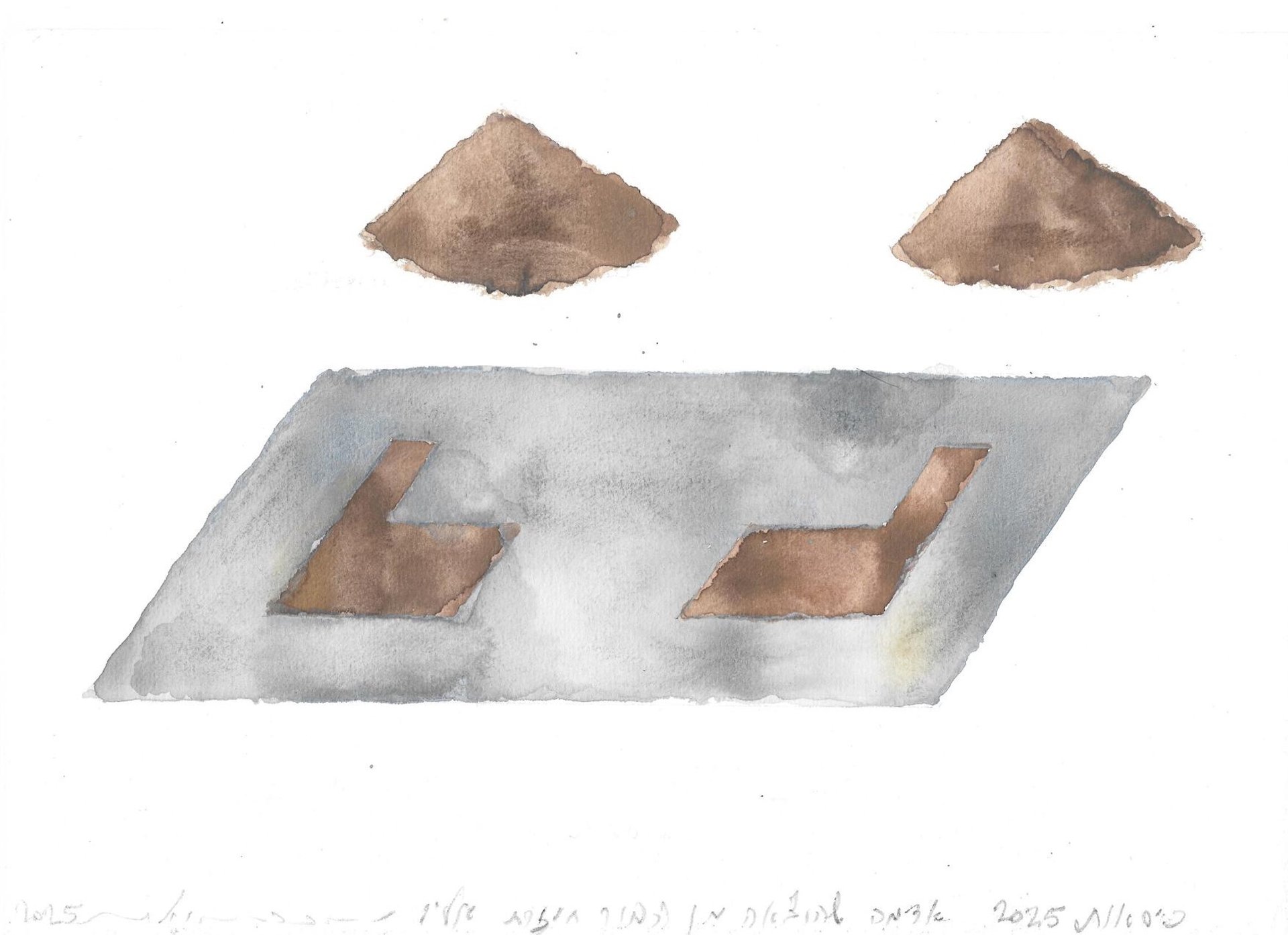
Micha Ullman, Outline for two chairs, 2025 Courtesy the artist
“It’s the first project that addresses the Jewish-Arab space, which is why it is so studied,” explains Anat Lidror, who co-curated (with Tali Tamir) Metzer-Meiser: Take 2, a contemporary exhibition responding to Metzer-Meiser at the Givat Haviva Art Gallery in northern Israel.
“The special thing about it, and which turned it into a mythic project, is the hyphen,” Tamir said at the exhibition opening on 15 November. “It connects and also contains fears, suspicions, trust, mistrust, problems, all kinds of obstacles and misunderstandings and urban legends that arose here and there, correct and incorrect interpretations—and all this is part of the story of this exhibition.”
The original 1972 project was inspired by the friendly ties between Metzer (a kibbutz established by Argentinian Jews in 1953) and Meiser (established in the late 19th century). Located just a few kilometres away, Givat Haviva was an apt venue to revisit this historic project, as the oldest Israeli institution promoting reconciliation between Jews and Arabs since its founding in 1949, and a civil society organisation working towards social change and peace. The original project took place exactly a year before the Yom Kippur War and the current exhibition opened on the heels of a tenuous ceasefire in the longest war in the country’s history.
Metzer-Meiser: Take 2 includes two of the original artists—Geva and Ullman—plus ten contemporary artists who are Jewish and Palestinian, established and emerging, male and female: Tsibi Geva, Saher Miari, Marion Fuchs, Faten Abu Ali, Noa Karavan-Cohen, Smadar Timor, Abed Elsalam Sabia’, Peter Jacob Maltz, Asalah Hassan and Dror Ben Naftaly.
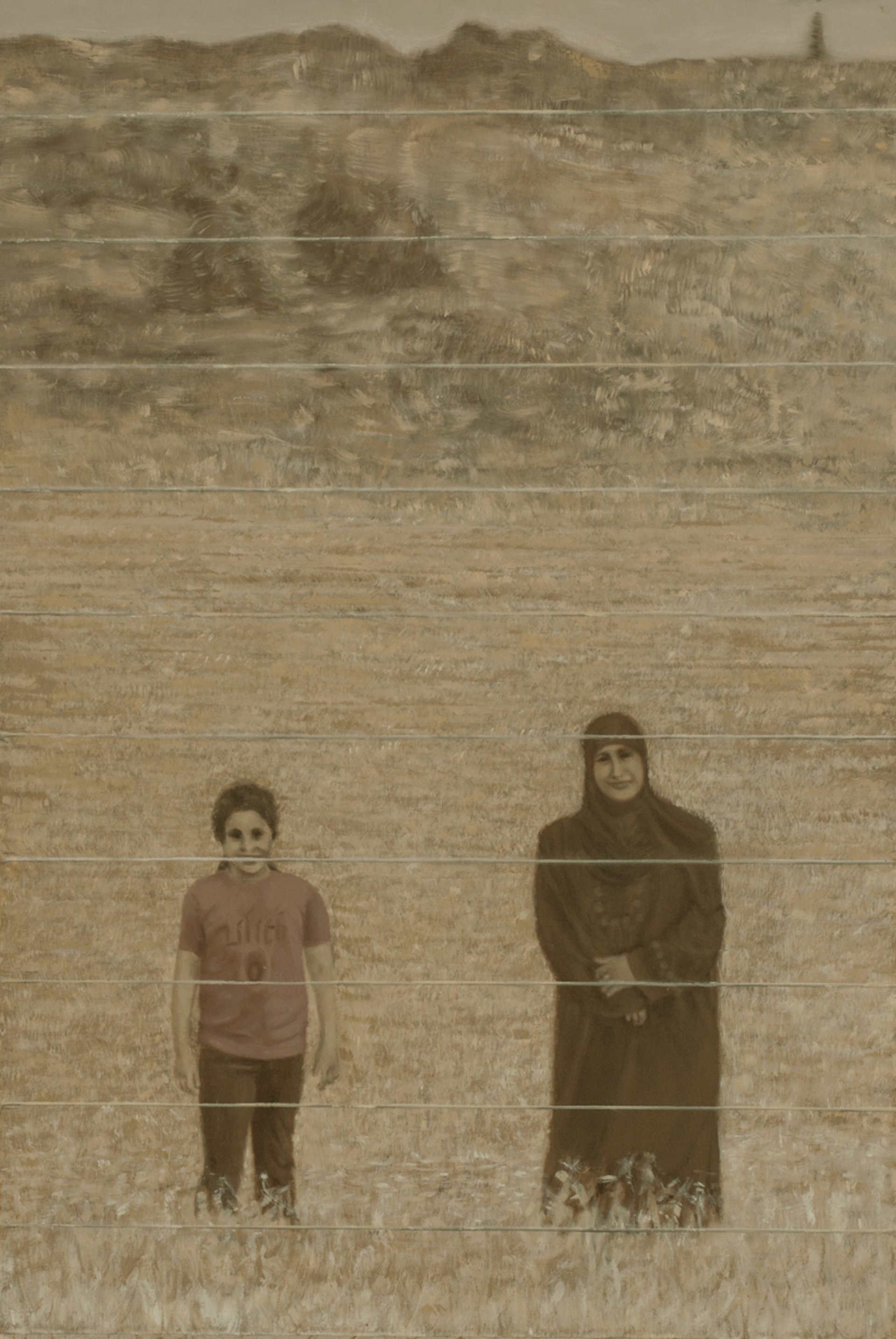
Marion Fuchs, The Conversation, 2010 Photo by Tal Badrak
Exhibition planning began around four years ago, when Ullman asked to revisit the project’s original location. Representatives of the Givat Haviva Art Gallery accompanied him there, and started discussing a reassessment of the project since the 50th anniversary of Metzer-Meiser was approaching. According to Lidror, Ullman liked the idea and was eager “to respond to the space which, from his perspective, represents hope”. Geva took more convincing. “He has a lot to say. He actually points his statements more towards self-criticism, with where we’re headed.”
Metzer-Meiser: Take 2 slowly came together as the curators invited other artists, including Arab artists and women (a marked difference from the 1972 project). The project was also delayed by the onset of the war in 2023. “Then, a year into the war, we returned to it and said, ‘Now is the time. There’s no other time,’” Lidror says. “The story here is not just of two peoples, but of a desire to rethink.”
Ullman’s work for Take 2 includes two chair-shaped pits filled with sand.Geva created Books sunk in a swamp and Concrete Jewish bookcase, which hold historic books immersed in concrete, symbolising a petrification of the values described in the books.
The Jerusalem-based artist Faten Abu Ali, who creates hybrids through a process of botanical grafting as a metaphor for mixing different species, merged olive and carob trees. “It’s not something that’s supposed to work,” Lidror says. “She makes an attempt to say, ‘Maybe we can add something new here, from within the Jewish-Arab story.’ Not more of the same, we need to rethink.”
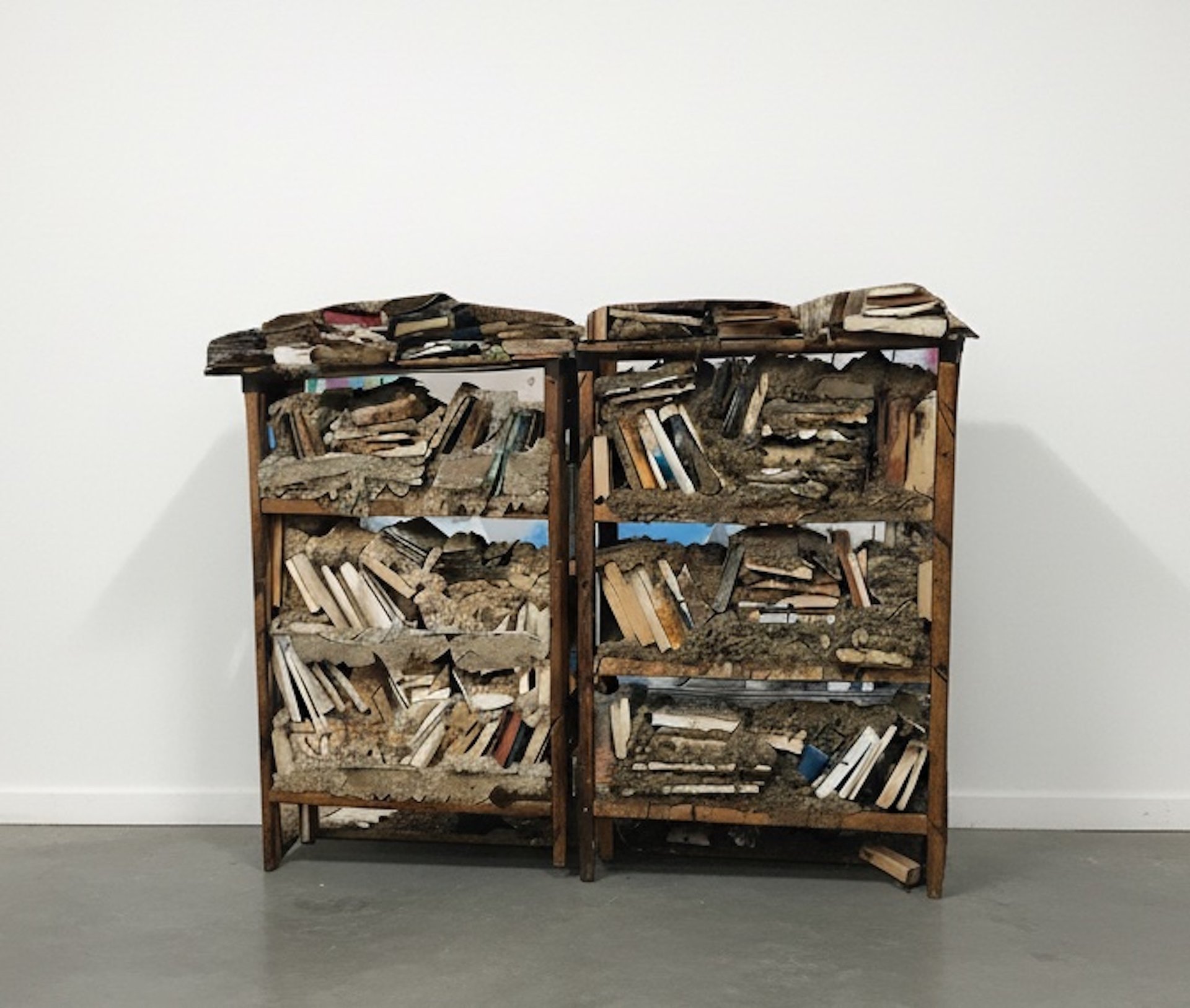
Avital Geva, Books sunk in a swamp, 2025 Photo by Kobi Shraya
Meanwhile, a 20-minute documentary created for the exhibition by Noa Karavan-Cohen and Smadar Timor, called Rethinking Metzer Meiser, includes interviews with six people who remember the 1972 project. And Saher Miari created a transparent tube-like column filled with soil and personal items, as an allusion to Ullman’s original soil exchange work and Or Ner’s interred objects.
As for the original Or Ner project that hoped to cast-off the fragments that hinder our development, it may be lost to history. Its whereabouts are unknown, the curators are still trying to determine if it’s buried in the fields near Metzer and Meiser, or perhaps even somewhere in Kibbutz Hatzor, where the artist lived. Or Ner died last year, but if he were alive might he ask if we can still move forward, even without locating and freeing ourselves of the obstructions we’ve inherited?
“The innocence has disappeared,” says Lidror of how the collective mindset has changed between the 1972 project and Take 2. “There’s difficulty, but also something that brings us closer to understanding complexity.”
- Metzer-Meiser: Take 2, until 17 January 2026, Givat Haviva Art Gallery, Israel