
The art trade has a knotty relationship with investment funds. Although the $57.5bn art industry has arguably been built on the premise that art is a good investment, the bare-faced profit pledges of funds make traditionalists squirm.
Art funds famously boomed in the early 2000s, when the rise of the contemporary art market seemed inexorable. When that boom went dramatically bust after the 2008 financial crisis, funds largely fizzled out.
Today, the art market is in the doldrums again. Which makes it the ideal time to launch a new art fund, says Philip Hoffman, the chief executive of the Fine Art Group, which he founded in 2001 as the Fine Art Fund. Between 2001 and 2021, Hoffman oversaw nine art investment funds, running for five- to ten-year terms and on average achieving a 15% compound annualised return on its blue-chip funds, he says. “I proved the point that art could be a good investment—we made money on 84% of the art we bought, we lost it on 16%,” Hoffman tells The Art Newspaper. “Where it didn’t go so well was when the funds were too small [below six figures], as they are so expensive to run.”
Now, Hoffman is planning a fund comeback—if he can raise enough capital to make it viable (art is expensive to buy and to keep, hence management fees are high compared to other assets). “Now is a brilliant time to start a fund, but it’s got to be big enough, have low enough charges, and be run by a professional fund manager, not just art experts,” Hoffman says. The cost of regulation is almost prohibitive, he adds, unless the fund is around $150m or $200m-plus, and that is the amount he is trying to raise.
Access to primary market works is easier in a tough market, as once protective galleries “want to sell to anybody”, Hoffman says. His previous funds only dealt in a small amount of primary market material, and in those cases it was done in partnership with galleries, which would then receive a share of any profits made.
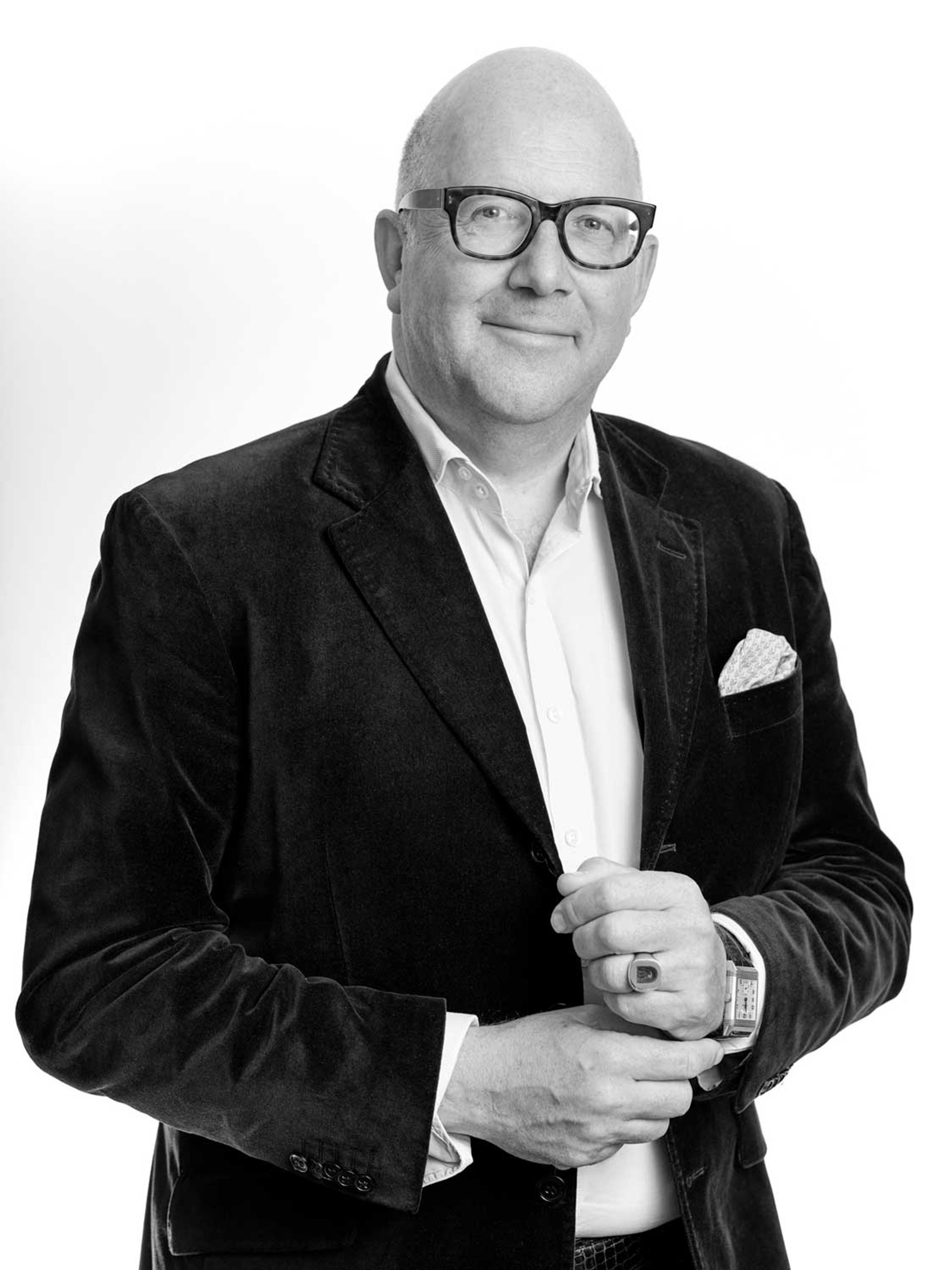
Philip Hoffman, the chief executive of the Fine Art Group art fund
Courtesy the Fine Art Group; Photo: Nick Smith Photography
Liquidity is an omnipresent issue for the art trade, hence Hoffman tells clients to expect around a seven-year investment term. Exits are inevitably inelegant, too—when the time came to close, the Fine Art Group held fire sales of the art held in its funds with predictably mixed results. “When it came to the end of the term, we had to liquidate and show what the profits and losses were, because it’s all very good saying ‘we’ve just made 30% on this one and 20% on that’. But what about the mistakes?” Hoffman says. “Any asset manager, whether buying shares, gold, silver or property, they all have their mistakes, the things they cannot sell.”
‘Speculative and inherently illiquid’
The art advisor Alex Glauber, the president of the Association of Professional Art Advisors (APAA), agrees that in the art industry “there’s an inherent response bias to how people share information—they talk about their winners and not their losers”. That, he thinks, contributed to the “prevailing narrative for almost a decade and a half, until a couple of years ago, that the art market was an extraordinary hedge against inflation and would outperform the S&P 500. But those who are in it know that’s not necessarily the case.”
A fund in a work’s provenance can undermine its value, Glauber says, and his clients are often reluctant to buy works being sold off: “It signals to a prospective buyer that if a fund owned this purely for investment potential and is now selling, am I to assume that they’ve decided that there’s no more value or utility in owning this thing? The very fact that it’s being offered suggests that the fund has decided that it’s not worth owning anymore. So why would I buy it?”
The challenge with art funds is that art is “speculative and inherently illiquid”, Glauber says. “If you put your money into an artwork and then eventually decide that it hasn’t performed to your liking, it’s not simply a matter of selling it with a slight haircut, say 90 cents on the dollar, like you would with an equity or a bond. With the art market, demand can just dry up. For art funds, when they’ve been successful in raising capital and then go out to deploy that capital, even if they get it right a fair number of times, the times that they don’t get it right become a heavy drag on their overall performance.”
Some art funds publicise the works they have bought and sold successfully. Not Hoffman, although he concedes he did speak publicly about the profit on a Peter Doig, Iron Hill, bought in 2005 for $820,000 and sold in 2006 for just over $2m. “Otherwise, we’ve probably been involved in over a billion dollars of art [transactions], but in all that, I don’t think we’ve ever discussed what we guaranteed, what we bought or what we sold, because that destroys the value,” he says.
Such secrecy is not available to publicly traded funds that pride themselves on transparency, such as Arte Collectum, a new Sweden-based art fund registered with Euroclear and distributed by Nordea and SEB banks, all of which have strict compliance requirements. Co-founded in 2022 by Niklas Belenius, a Stockholm-based art dealer, and Jonas Höglund, the fund’s chief executive, Arte Collectum aims to appeal to impact investors through its strategy of buying works by undervalued artists (such as women, people of colour and those from marginalised groups) then trying to raise their market value by loaning them to institutional shows—a strategy it refers to as “active management”.
The first fund in 2022 raised €20m from Swedish investors, which was spent on 46 primarily post-war and contemporary works by artists such as Carmen Herrera, María Berrío, Sheila Hicks, Omar Ba and Stanley Whitney (one work has already been sold, for a profit). With an investment term of six years (extendable by two), the fund has “a target return of 100%, or 12% per year net after fees [which include the management fee of 2.5%, plus start-up costs of up to €750,000 spread across investors]”, Höglund tells The Art Newspaper. In the event of profit sharing, investors receive 80% and Arte Collectum 20%.
‘A buyer’s market’
Arte Collectum is currently raising for its second fund (due to close this month, but possibly extended until December), aiming for €50m and marketed to investors in Sweden, Denmark, Finland, Norway and the UK. It has already made five acquisitions—works by the Indian artist Viswanadhan, the Swiss Japanese artist Leiko Ikemura and the American artists Sylvia Snowden, Jaune Quick-to-See Smith and Lynne Drexler. “It’s a buyer’s market, so it’s a good time to be starting a second fund right now,” says Lars Nittve, a curator and former museum director who is now chair of Arte Collectum’s investment committee, which guides its acquisitions. Nittve, unusually for an art fund, comes from a museum background—he is best known as the founding director of London’s Tate Modern, but has also led the Louisiana Museum of Modern Art, the Moderna Museet in Stockholm and M+ in Hong Kong. He sits on Arte Collectum’s acquisition panel alongside Belenius and Deborah Gunn, a Seattle-based art adviser known for her previous role as associate director of art finance for the collection of Microsoft co-founder Paul Allen.
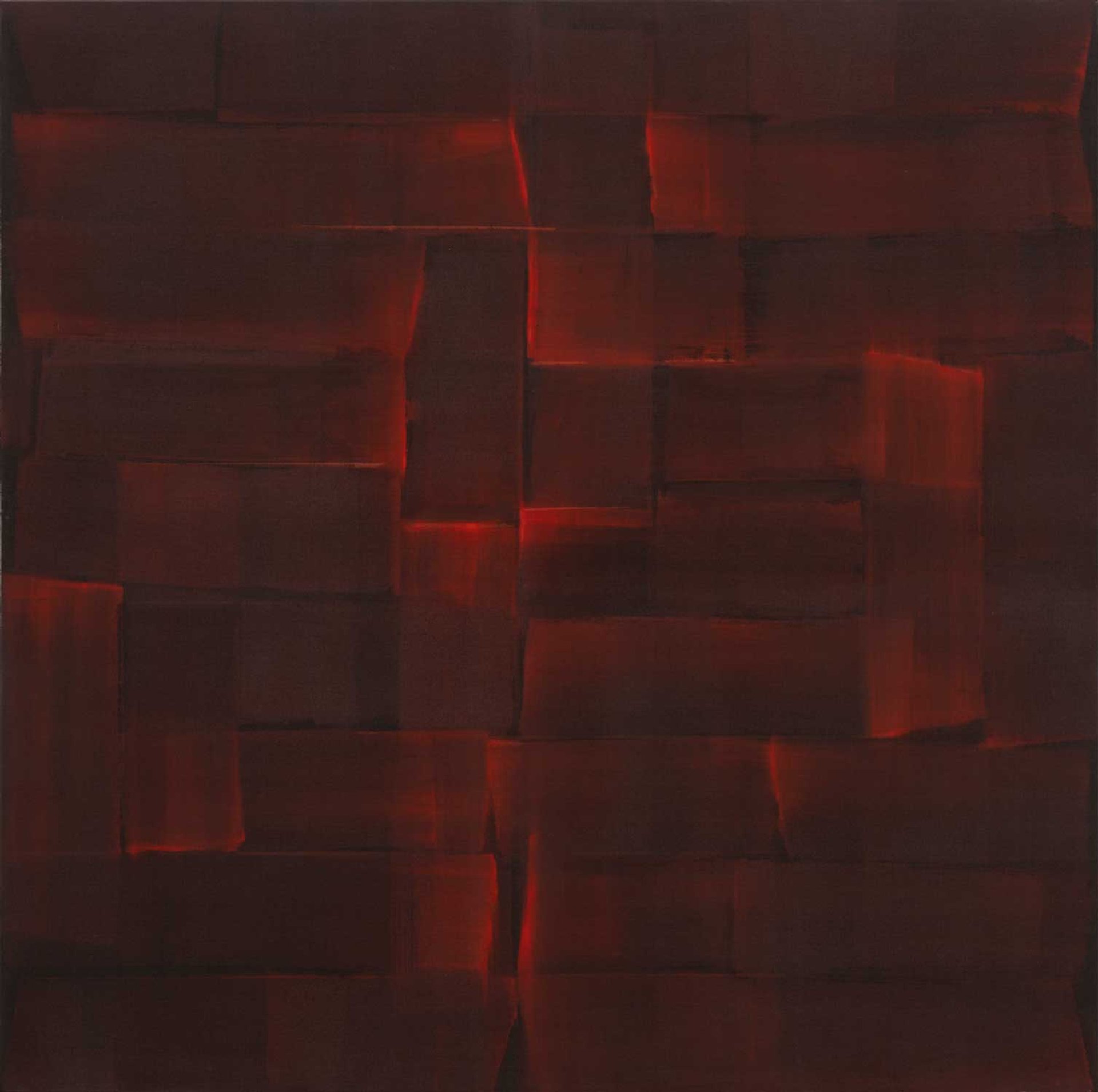
The Indian artist Viswanadhan’s Untitled (2006) has also recently been acquired by Arte Collectum
© the artist; courtesy Arte Collectum
Nittve received the call from Belenius asking him to join the fund “out of the blue” in 2021, when Nittve had just moved back from Hong Kong to a village in northern Sweden. He was attracted to the idea of a fund acquiring undervalued artists and “pushing equality” while at the same time creating a financial upside. So, the appeal of Arte Collectum was threefold for him. “One was that it was such a regulated set up,” he says. “The second was the possibility of making a difference and having a financial upside in that. And the third was that, coming from museums, I knew that if you buy really great works, museums will want to exhibit them.”
Finally, Nittve says, Arte Collectum offers the chance to be an impact investor, contributing to a more democratic and equitable art market “by minimising the gender and ethnicity price gap”.
While the idea is a worthy one, this investment fund, like all others, faces three structural frustrations of the art market, as Glauber outlines. “One, you’re dealing with a marketplace that does not have the efficiency or liquidity of traditional financial markets,” he says. “Two, if you think about the unit of exchange or investment, art is heterogeneous—it’s not fungible, or interchangeable. And on top of that, its value is socially constructed and ever-changing, so there’s little predictability or consistency.” Funds can reap rewards when their timing is right, but they are easily thwarted by the vicissitudes of taste.