

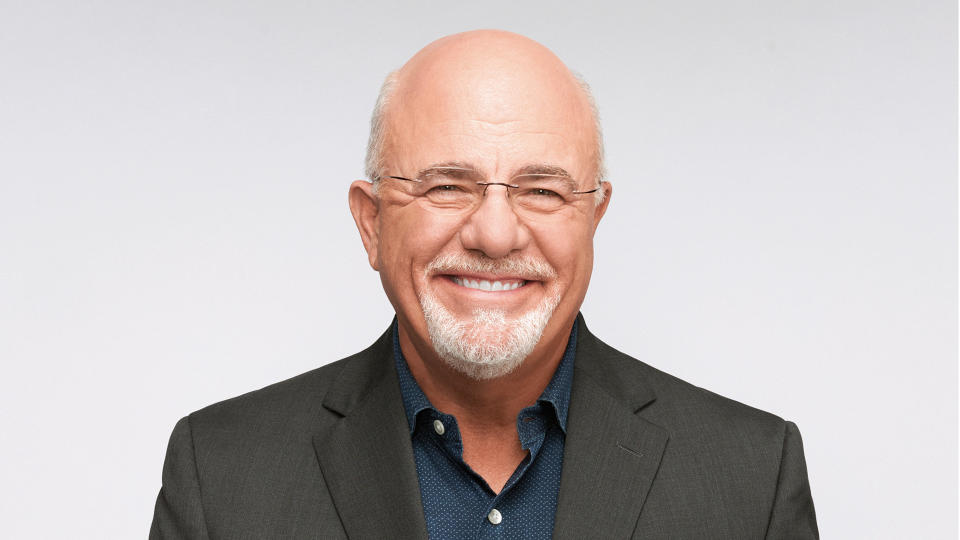
Dave Ramsey is a prominent financial guru who has advised people on personal finance for years. His main emphases tend to be paying off debt, saving for emergencies, investing wisely and spending strategically.
Read Next: 5 Frugal Habits of Mark Cuban
Check Out: 4 Genius Things All Wealthy People Do With Their Money
With over 25 years of experience, it’s no stretch to say that Ramsey’s money lessons have positively impacted countless people. His Financial Peace University, a nine-lesson personal finance course designed to help people take back control of their money, has helped almost 10 million people on its own. And that’s to say nothing of his podcast, “The Ramsey Show,” and his many books.
But the question is this: Have Dave Ramsey’s money lessons reached other financial experts?
In short, yes. GOBankingRates had the pleasure of speaking with two such individuals — Steven Kibbel and Hope Ware — about the money lessons they learned from Ramsey and how those lessons helped them with their own finances.
Wealthy people know the best money secrets. Learn how to copy them.
Pay Down and Avoid Debt
Living a debt-free life is one of Dave Ramsey’s top priorities. In fact, it’s the second of his seven “Baby Steps” to taking control of your finances.
Steven Kibbel, a certified financial planner and financial advisor at Prop Firm App, said it’s also one of the greatest lessons he’s picked up from Ramsey. In particular, he’s followed the debt snowball method to pay off debts.
“Paying off debt as fast as you can is super important. Dave’s ‘debt snowball’ method of paying off the smallest debts first really gets things moving,” he said. “Getting rid of bills hanging over your head makes saving and planning for the future way easier.”
Beyond paying off debt, Kibbel always follows Ramsey’s advice to avoid it altogether — especially high-interest debts.
“Avoiding credit card debt is another lesson that served me well,” Kibbel said. “It’s easy to put everything on plastic, but those interest rates are killers. When I can, I always try paying with cash or debit instead — out of sight is out of mind, and you save a bundle in fees that way.”
Explore More: I’m a Frugal Self-Made Millionaire: 6 Things I Never Waste Money On
Every Dollar Needs a Purpose
For Hope and Larry Ware, a couple who run Under the Median, a website about living frugally without sacrificing quality of life, some of Ramsey’s financial lessons have also been pivotal in their family’s success.
One of the big ones is that every dollar needs a purpose.
“The first time I listened to Dave’s radio show and heard him say, ‘Every dollar needed a job to do,’ I thought he was crazy! I believed that as long as you consistently spent less than you made (and your bank account was growing) that proved that you were budgeting efficiently,” Hope said.
“Several years later, my husband made what we now call ‘a big, green pile of money mistake.’ We had saved a few thousand dollars and promptly spent it all. Two weeks later, I was reading a Dave Ramsey book (which I had borrowed from the library). The words, ‘Zero-based budget’ and ‘every dollar has a job’ leapt off the page,” she continued.
“It was only then, that I made the connection in my head. We had spent the money because it didn’t have a specific purpose. From that moment on, we have managed money with an end goal in mind — for every dollar.”
Have an Emergency Fund
Two of Dave Ramsey’s Baby Steps — steps 1 and 3 — involve having an emergency fund. The first step is to save $1,000 for a starter fund. Once you’ve paid off all debts (aside from your home), the next step is to more aggressively save up until you have three to six months’ worth of expenses set aside for emergencies.
For Kibbel, this lesson is one he takes to heart.
“Having an emergency fund is a no-brainer,” he said. “Stuff happens sometimes that costs money, like car repairs. If you’ve got cash saved already, you won’t have to put fixes on a credit card and pay interest.”
Have That ‘Gazelle Intensity’
Gazelle intensity is a term Ramsey has used to describe paying off debt quickly and with all the intensity of, well, a gazelle. It’s about running away from that debt — by paying it off — like a gazelle runs from a cheetah on the hunt.
Of all of Ramsey’s money lessons, this is the other big one that’s most impacted the Wares.
“In 2010, we were living with four sons in a tiny, two-bedroom bungalow in a quickly decaying neighborhood. The house was paid for and we had some cash set aside for a new home, but we realized we really needed to move quickly,” Hope said.
At that time, she was reading one of Ramsey’s books, which brought up the concept of “gazelle intensity” and lit a fire for her and her husband.
“My husband and I vowed to save enough additional money to pay cash for our next home. Our gross income was around $40K a year. My husband and I took our budget apart piece by piece, discarding anything we absolutely didn’t need and slashing all the other expenses as much as possible. We sold items. He worked overtime. I pinched every penny,” Hope said.
“Twenty months later, we had saved $30,000. I did the math and realized that we had saved nearly forty percent of our income. In August of 2012, we paid cash for a larger home in a nice neighborhood. We’ve been in our home for fourteen years now. We remained debt-free, finished raising our four sons, and my husband retired. To this day, I give credit to Dave Ramsey. Without his advice, none of this may have been possible.”
More From GOBankingRates
This article originally appeared on GOBankingRates.com: I’m a Financial Guru: Here Are 4 Lessons I Learned From Dave Ramsey