

Imagine a child growing up in communist Poland in the 80s. Picture the grand, yet ultimately hollow, promises of five-year government plans that fizzled out before they could light any real fire under the economy.
Friday, April 5th 2024, 11:07AM
by Mint Asset Management
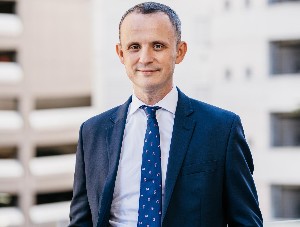
By Marek Krzeczkowski, Portfolio Manager
It was a world where Władysław Gomułka, the First Secretary who played a role in establishing communist rule in Poland, once famously proclaimed, “We stood at the edge of the cliff but since have taken a great step forward”. The quote captures the irony and disillusionment many felt about the promises and realities of communist governance. This was my playground, where ambitious dreams were routinely dashed by the harsh realities of a system that lacked flexibility and a coherent process. It was a masterclass in how “not” to manage complexity, delivered in the unforgiving classroom of real life.
But every cloud has its silver lining. Mine was my mother, a high school physics teacher with a knack for solving the mysteries of the universe in our kitchen over cups of too-strong coffee. With emphatic conviction, she believed the universe was a giant puzzle governed by rules and processes. Stray from these, she warned, and you’re not just tempting fate but inviting disaster.
Her favourite tales weren’t just cautionary – they were catastrophic. Bridges buckled under the weight of ignored calculations, space missions doomed by overlooked details. To a young mind, these weren’t just stories, they were epic tales of what happened when you ignored the process. These lessons in the physics of failure stuck with me as I ventured into the world of finance.
Fast forward to the frenzy of financial markets, where I found myself a portfolio manager navigating the tumultuous seas of market speculation and investment. It was here, amidst the frenzy of buying and selling, that my mother’s lessons in the rigour of process found new life. Much like the universe, the market was unforgiving to those who ignored its underlying principles.
Enter Barton Biggs and Michael Lewis, two sages of the financial world whose works became my North Star early in my career. With his sharp insights into market dynamics, Biggs, a famous Morgan Stanley chief global strategist, and Lewis, a master storyteller of financial follies, provided vivid illustrations of what happened when the process was abandoned on the altar of greed and speculation.
Consider Biggs’ analysis of Japan’s asset price bubble burst in the early ’90s – a tale of collective forgetfulness, with investors caught in a dizzying euphoria of perpetual growth, carelessly ignoring the core principles of valuation. What followed? A ‘lost decade’ marked by economic doldrums, a testament to the folly of a speculative frenzy.
In “The Big Short,” Lewis crafts a gripping recount of the 2008 financial meltdown, painting it as a contemporary saga of arrogance and institutional oversight. Through his writing, he brings to life the chilling consequences of ignoring the fundamental principles of finance and investment. The heroes of his book were the oddballs and outsiders who, sticking religiously to their investment process, saw through the madness of subprime mortgages and bet against the crowd. They were the Davids against Goliath, armed with nothing but their slingshots of rigorous analysis and a belief in the process.
These aren’t stories but lessons in a world adrift in speculative currents. They underscored the value of sticking to a disciplined, research-driven approach in the face of market mania. This philosophy, rooted in my mother’s teachings and refined on the trading floors, became my guiding light.
As I write this, the Bitcoin has reached NZ$100k. It’s hard not to be seduced by the notion of ‘the next big thing’ – that dazzling opportunity promising swift and easy fortune. The temptation is ever-present, whispering sweet nothings about shortcuts to success and the allure of quick wins. However, history and the erratic nature of financial markets have consistently shown us true success is neither quick, nor easy. It is the discipline, thorough research, and a steadfast commitment to a well-honed process. It’s a lesson echoed through the ages, from the economic predicaments of communist Poland to the speculative bubbles that have periodically battered and bruised financial markets. The true tales of triumph that endure are not those of meteoric rises fuelled by speculation but rather the stories of those who, with grit and tenacity, navigate the tumultuous seas of investment with rigour. It is slow and steady who wins the race.
So, as you navigate the complex world of investments, remember the tales of those who flew too close to the sun without a process to anchor them. The story of Long-Term Capital Management serves as a prime example. In the late 1990s, there were like a rock star on the hedge fund stage, with outstanding performance and a team that included Nobel Prize laureates in economics. Their investment strategies, rooted in sophisticated mathematical models, appeared invincible. Yet, in 1998, the fund suffered devastating losses as their heavily leveraged bets came undone amidst the Russian sovereign debt crisis and ensuing global market upheavals, requiring a Federal Reserve bailout to prevent broader economic fallout.
This case underscores the peril of focusing solely on performance without understanding the underlying processes and risks. It’s a stark reminder that even the most dazzling flight can end in a fall if a rigorous, disciplined approach to investment does not guide it. At its core, the world of successful investing goes beyond just performance numbers and graphs; it’s about the narratives we construct and the systematic approaches we trust to navigate us through the financial markets.
I incorporated many of these historical lessons and market wisdom into our investment process and strategies. We focus on adding value through meticulous stock selection, searching for the best global and domestic companies with the conviction that the data-driven approach can prove its worth. A compelling finding from Bessembinder’s study highlights the significance of selective investment. It revealed that, when considering aggregate shareholder outcomes, a mere 2.4% of firms were responsible for all of the $US 75.7 trillion in net global stock market wealth created from 1990 to December 2020. This statistic underscores the disproportionate impact of a handful of high-performing firms on overall market wealth creation, advocating for an active stock selection as a key cornerstone of a successful investment strategy.
We adopt a prudent approach regarding currency exposure, hedging our bets to recognise the unpredictable nature of currency movements. The empirical evidence suggests that consistently predicting dynamic currency shifts is a near-impossible task, so I choose caution over speculation. Warren Buffet recently validated our view in a shareholder letter, saying, “Neither Greg [… Greb Abel – Warren Buffet’s named successor] nor I believe we can forecast market prices of major currencies. We also don’t believe we can hire anyone with this ability”. I agree.
The long-term strategic allocation is a testament to our belief in thoughtful, purpose-driven investment. It’s not simply a set of guidelines but the foundation upon which I build and adjust our strategies, always focusing on sustainable growth and risk management. In contrast, tactical asset allocation, shifting weights between asset classes, must meet its intended mark despite promising adaptability to market shifts.
The risks outweigh the potential benefits when trying to time the market. More often than not, it’s similar to betting on rain in the desert – hopeful but hardly fruitful. For every story of someone who managed to “sell and buy back” equities at the “right time”, there are many of those who missed the equity market bounce. Look no further than March 2020, when many investors sold equities only to miss one of the most substantial market recoveries in recent history. Or September 2022, when most economic commentators advocated for a global recession and underweight equities positioning, only to miss a spectacular bull market. This perspective reinforces the value of a steadfast, strategic approach over the uncertain rewards of tactical gambling.
In this changing financial environment, my strategies leverage macroeconomic data and theory, acknowledging the broader economic currents that shape the investment landscape. We use derivatives not as speculative tools but as instruments for managing risk, allowing us to navigate market volatility with greater confidence.
This investment approach, grounded in a deep understanding of the markets, research, and a disciplined process, sets us apart. It’s a philosophy that echoes the lessons of my journey in life. From the shadowed streets of Poland to the spotlight of financial markets. If there is one lesson I’d like you to hold onto, it’s this: in the vast, often unpredictable universe of investment, the process isn’t just a tool; it’s your compass.
Disclaimer: Marek Krzeczkowski is Portfolio Manager at Mint Asset Management Limited. The above article is intended to provide information and does not purport to give investment advice. Past performance is not a reliable indicator of future performance.
Mint Asset Management is the issuer of the Mint Asset Management Funds. Download a copy of the product disclosure statement at mintasset.co.nz
Mint Asset Management is an independent investment
management business based in Auckland, New Zealand. Mint
Asset Management is the issuer of the Mint Asset Management
Funds. Download a copy of the product disclosure statement
at mintasset.co.nz
Comments from our readers
No comments yet
Sign In to add your comment
