
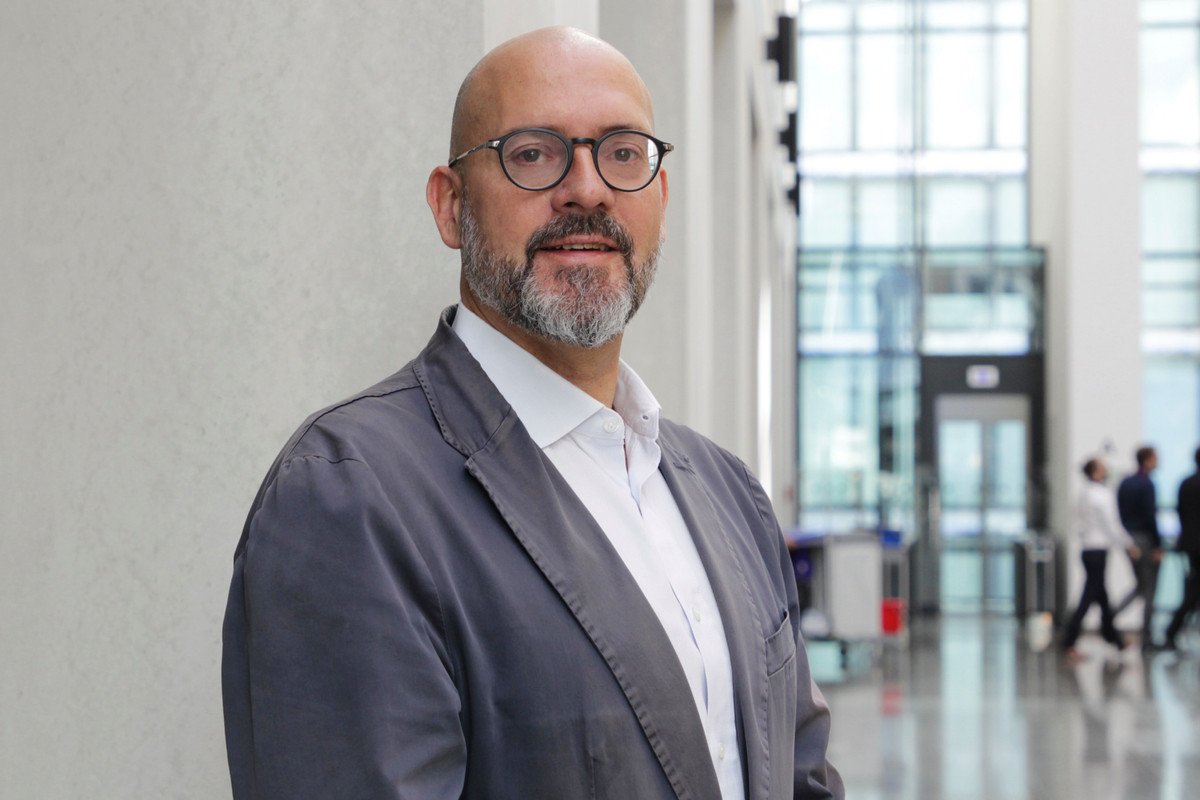
It’s important to understand that people are not just buying art for an investment return, Adriano Picinati di Torcello, global art & finance coordinator at Deloitte Luxembourg, highlighted at the beginning of our interview on the topic of art and investing. Picinati di Torcello was responding to a question as to why people buy art. “The main motivation to buy art is emotion, thank God. That’s great.”
Deloitte’s art and finance report–the –aims to understand the main motivations behind buying art, whether these are “pure investment, pure collecting, or buying with emotion but also with a sense of investment.”
The report found that “5% only buy only for investment–so, just for financial return. 31% buy only just for collecting–so they don’t really have this financial motivation behind. And 64% have the two motivations–so they buy because they love, but they also have some, I would say, financial considerations.” Financial consideration doesn’t necessarily mean financial return, he added. “It can also be asset diversification, inflation protection, those kinds of things.”
When you spend a relatively small amount of money–say, €500–you probably don’t care too much about the financial aspect. But when you start to spend a substantial amount of money, the financial aspect gets more important. First, people wonder: “am I paying the right amount?” Second: “is this something that will keep its value over time?” And third: “could this potentially increase in value over time?”
44% of art collectors see increase in acquisition to protect against inflation
We have seen high inflation and increased interest rates in the last couple of years. Has the difficult macro-economic environment had an impact?
Referencing the report, Picinati di Torcello replied, “we have seen an increase of acquisition in art to protect against inflation. 47% of art professionals that we surveyed are seeing an increase. 44% of art collectors are seeing the same. But on the wealth management side, only 12% have seen that.”
“Art-secured lending market is still growing”
Despite the context of high interest rates, “the art-secured lending market is still growing,” said Picinati di Torcello. This is when works of art serve as collateral for loans. “I think that’s something that kind of surprised us. Even if it becomes more expensive, there’s a growing demand for art-secured lending. We have seen, from 2022 to 2023, an increase of 11% of the market. So it’s still double digits.” That was the first striking element. “And this will continue for the next years–probably at a lower rate, but it will continue to grow, at least from our findings.”
“Due to the environment, lenders tend to be a bit more conservative,” he added. The “cost-to-income ratio may decrease, so you may get less.”
There are also differences between private banks and family offices. “It seems that when private banking offer art-secured lending, the motivation is more about liquidity for business operation, while when it’s family offices, it’s more to develop the collection–to buy more works.”
“Also quite–I think–interesting to report, is that even if this market is strongly dominated by the US domestic market and by the US banks, we can see–slowly but surely–that this is also now developing in Asia and Europe. And it’s mainly driven by the fact that American banks are expanding their service offering in Europe and in Asia.”
“The technology has matured tremendously”
Now, we switch gears. Technology is on the tip of everybody’s tongue today, no matter the sector. What are some of the impacts on the art world?
“Technology is a very important driver for change,” argued Picinati di Torcello. “All the technologies that we are seeing developing in the fintech world are also developing in the art tech world.” This includes technology around artificial intelligence, fingerprinting, DNA technology or blockchain–and these are gaining ground.
“We’ve been looking at technology for years. Before, it was maybe just a concept; after it was more a kind of a beta company; today we have solutions,” he said. “The technology has matured tremendously, and now it’s–to a certain extent–ready, and this will continue to accelerate.”
In terms of data and artificial intelligence, for instance, “some companies now offer services to identify trends related to artists. But AI could also be used to track fakes and forged artworks. Fingerprinting, or DNA technology, allows to kind of create a unique identifier for an art object.” This can reduce risk and the cost of performing due diligence, as well as increase efficiency.
We’re also starting to see some initiatives around “fractional investment” in art and collectibles, he noted. “It’s not just limited to fine art. It’s also for watches, classic cars, jewellery, luxury bags.”
Technology for collection management and supporting the cultural sector
But “when you look at technology, it’s not only for investment. It can be used for collection management,” said Picinati di Torcello. “It can be used for the four pillars of the wealth management ecosystem.” These are accumulating, transferring, protecting and converting wealth. More data, fingerprinting and blockchain can “definitely” support the art secured-lending business, while technology can also be used for philanthropic activities and the governance of collections.
Beyond these benefits, technology can also support new funding mechanisms for artists and the the cultural sector. “Just to give you a concrete example. Let’s say I’m an artist. I need financing to create a new set of works. I don’t have the money. Could I issue some tokens of my future production, and like that, I can have people buy those tokens to finance the production? And when I resell, I can reimburse the ones that have bought the tokens?”
It’s about being creative with how to use technology to support culture

“I think it’s about being creative with how to use technology to support culture,” he argued. “I believe it’s very important because we have–on one hand–a growing recognition of the importance of the cultural sector as an economic sector, but also in terms of the benefit it brings to society. But on the other hand, we have a lack of funding or reductions of public funding for the cultural sector. So we need to find new funding mechanisms to support culture.”
What is the next generation looking for?
When they buy art, “emotion remains the main motivation,” said Picinati di Torcello. “But what is interesting is that probably the younger generation seems to be more aware of the financial attributes of art, and there’s maybe a better understanding of where to get the info, how to look at it. It seems that they have a strong appetite for the financial attributes. So they will probably be the ones that will do more research and due diligence on the financial attributes of an artist, of an artwork.”
So there’s a space to fill. Today, art sellers provide a lot of qualitative information about the artwork and the artist, like the meaning of the artwork, the sources of inspiration or why the artwork is unique. “But what about also providing quantitative info about the artwork, such as undervaluation, such as past performance, such as liquidity, those kinds of things?”
“A second point of interest for the younger generation that we’ve seen which is massively different from the older generation is the interest for social impact investment. They’re much more geared towards impact in general, on different causes–it can be environment, education, whatever–but also culture.”
“Something that we would like to bring to the attention of wealth managers and family offices, I think it’s probably not to treat in the same way, an older collector and a younger collector, because expectations are different. So, not to have exactly the same value proposition.”
Not yet on the map in Luxembourg
But in Luxembourg, Picinati di Torcello said that he didn’t see a very strong interest for art and collectibles by wealth managers and private banks. This is likely partly explained by the type of clients served in the grand duchy–clients in the US, in comparison, are often wealthier.
Art and collectible assets are not yet on the map of Luxembourg private banks’ service offering, he argued, “which is, I think for me as a conclusion, a missed opportunity.”
“What we have noticed in our last art and finance report is that if passion is the first motivation [for art], now financial motivation is the second one. It’s the first time [in 11 years of reports] that financial consideration–a bucket of things that covers pure investment, diversification, inflation protection, store of value–is the second priority,” said Picinati di Torcello. “There’s a need to engage [clients] on two fronts if you’re a private banker or a family office.” There’s the emotional component and the financial aspect.
You cannot only be finance-oriented, you cannot be just emotion-oriented
“So you cannot be dry. You cannot only be finance-oriented, you cannot be just emotion-oriented,” he concluded. “This is where there’s an opportunity for private bankers, family offices to accompany their clients. Not on what they need to buy, what to sell, because the expertise is with the client. But more–on one hand–to share the passion, to understand the passion. And on the other hand–so, you love to buy, great, but how much do you have and what do you intend to do? What are your plans for the future? Do you have everything in mind in terms of documentation, in case you want to resell it, for KYC/AML? So you need to have invoices. What about the tax aspects, depending on the countries; what about the philanthropic considerations, if you have any; what about the governance, in case you have heirs? And that’s really a lot of questions that can be discussed with the client.”
This article first appeared in the .