
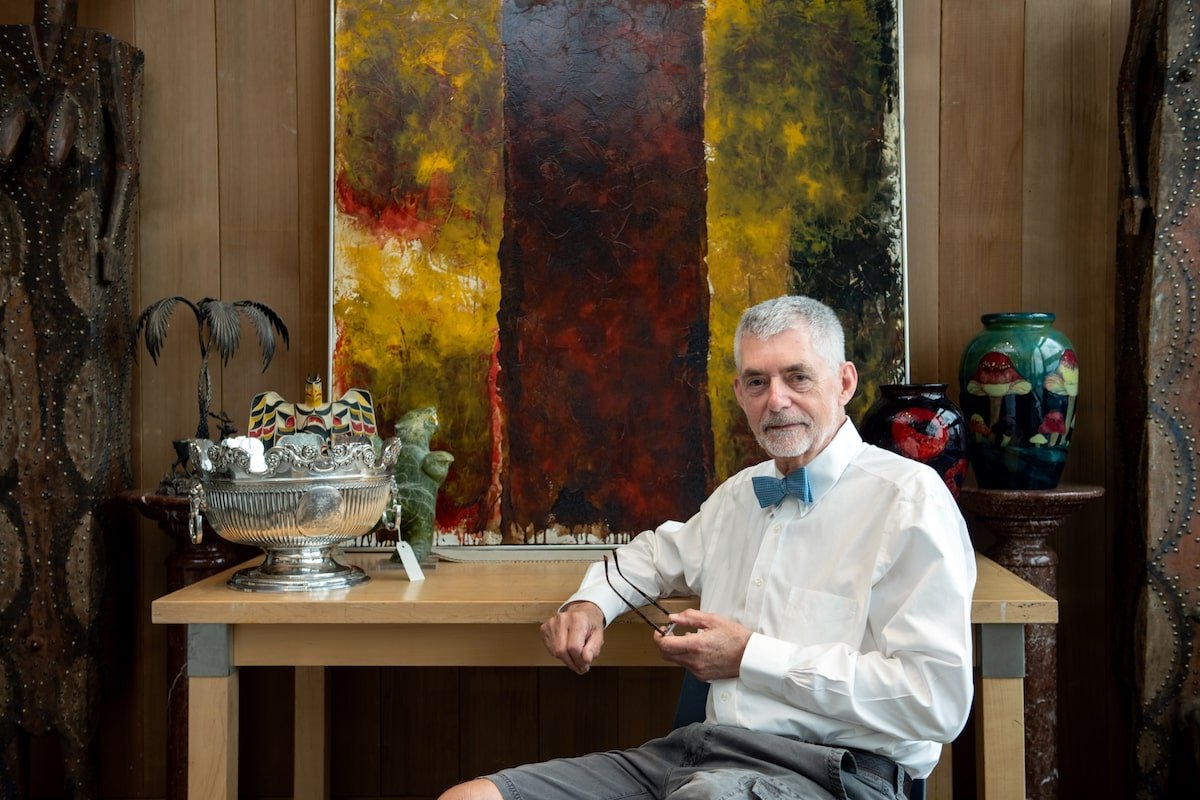
Bill Kime, senior decorative arts specialist at Toronto-based Waddington’s Auctioneers and Appraisers.Galit Rodan
Like most asset classes, fine-art markets can fluctuate, but in an ideal world they increase in value over time.
Between 1950 and 2021, the Sotheby’s Mei Moses Global Art Market Index shows an average compounding annual interest rate of 8.5 per cent, though much of that growth occurred prior to 1990. In the past 20 years the art market has seen an annual growth rate of about 5.3 per cent, well below the 8.3 per cent annual growth of the S&P 500 over the same period.
“In the ‘70s and ‘80s the price of everything was going up, everybody was looking for hedges against inflation, and artisan investment became quite a phenomenon,” says Bill Kime, senior decorative arts specialist at Toronto-based Waddington’s Auctioneers and Appraisers.
Mr. Kime explains that during this period the young baby boomers were pulling antiques and art out of the attics of their parents and grandparents, discovering some of the works had significant value.
“Books were published, and there was lots of discovery going on, lots of research, and that drove the market quite heavily for a couple of decades – really up until the turn of the century,” he says. “That really is now no longer the case.”
Mr. Kime adds that another boost to the art market came in the late ‘90s during the dot-com boom, fuelled by the introduction of eBay in 1995. “Those were real boom years for online marketing of collectibles, and that ground to an immediate halt with 9/11,” he says. “It just completely changed people’s views of collecting.”
These days, Mr. Kime says the potential upside is usually a secondary consideration, with most collectors emphasizing aesthetics and passion over returns and appreciation. Just because overall values are down, however, doesn’t mean the market is quiet.
“All I can tell you is we’re super busy,” says Robert Heffel, vice-president of Heffel Fine Art Auction House in Toronto. “It used to be that summers were quieter months, but we’re busy every month of the year and there’s a lot of people buying and selling.”
Mr. Heffel says the auction house hosts multiple in-person and online art auctions each year, with its biggest live event in May.
“We had three sessions and one of the sessions – the Canadian impressionist and modern art sale – was 100-per-cent sold,” he says, adding that the other two were 96 per cent and 99 per cent sold out. “Our June online auction was one of our record Junes, and the last couple months have been solid, so we’re seeing strength in the Canadian and international art markets.”
Mr. Heffel does warn that not every piece will have resale value, which is why it’s important to buy items you can enjoy for a long time. When it comes to resale value, he says the biggest factor is the artist’s reputation, and how well the individual piece speaks to their expertise.
Artists that are featured in major galleries, collections, exhibits, and in media typically see the value of their work increase, with the specific style and period of their career for which they’re most renowned fetching the highest price on the resale market.
“Art is a very long-term investment, so put it on your wall, enjoy it, and in 20 years it may be worth similar to what you paid for it, it may be worth less, or it may be worth more,” Mr. Heffel says. “If you bought a really top-quality piece by a good artist that has a secondary market, it hopefully will be worth more money, but you’ve got to enjoy it for all those years as well.”
Even if fine art doesn’t offer a significant long-term reward, it can provide some short-term tax relief, at least for business owners. Works of art priced over $200 fall under the Canada Revenue Agency’s Depreciating Property Class 8, which comes with an annual tax break worth 20 per cent of the amount paid.
“Clients who have their own business will purchase the pieces through their business, so that can be a big part of your tax planning,” says Deborah Herringer Kiss, director of Calgary-based Herringer Kiss Gallery and president of the Art Dealers Association of Canada. “We actually get a spurt just before tax season.”
Those benefits only apply to businesses that purchase art for display at the workplace, and typically only applies to works by Canadian artists. The value of the art also needs to be reasonable in relation to the business; it can’t be worth as much as the company itself. Those who sell their works at a profit may be subject to capital gains taxes, but they can also receive a tax break for donating art to a registered charitable organization.
Ms. Herringer Kiss says those who are looking to make a profit from their collection are advised to work with a registered dealer when making a purchase and check back in with them every few years to get a snapshot of the market for that artist or work.
At the same time, Ms. Herringer Kiss says you don’t need to be a business owner, or have a high net worth, to start building a collection.
“There’s a lot of different price points,” she says. “You can start a collection of prints or collection of small paperwork, and then maybe build up, or maybe your whole collection is just that, and it can have a lot of value.”