What Motivates Buyers to Invest in NFTs During Bear Market
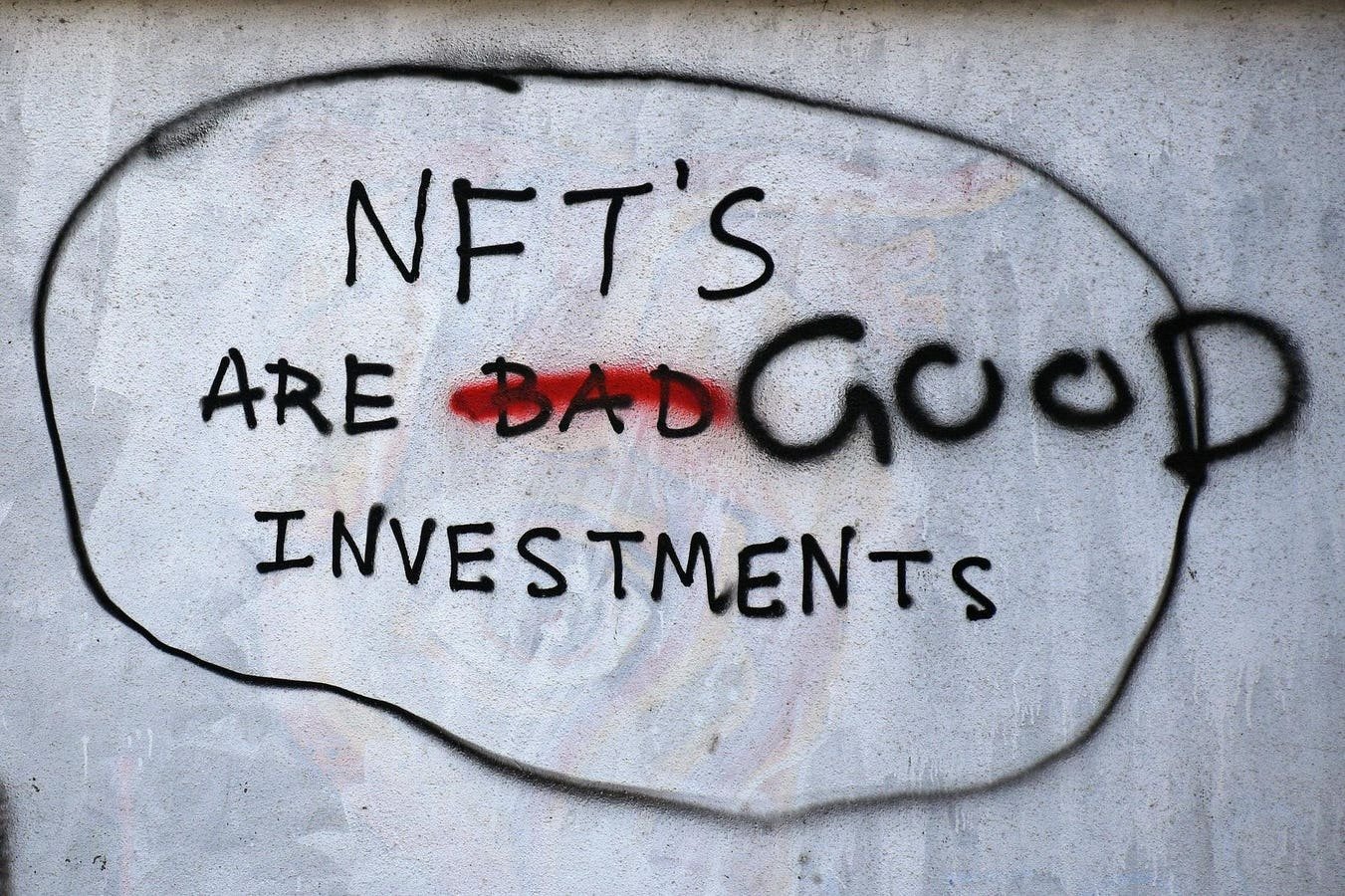
NFT’s are good investments
The NFT ecosystem exists on its three key players: artists, engineers and collectors. All of them are deeply connected and, like in any other system, interdependent. Usually, artists entering the crypto space get the advice to focus on building their community. Unlike in Web2, the Web3 community isn’t just followers who consume content. An artist’s community consists of collectors who are shaping the creator’s current and future market value. Collectors are crucial for the whole system to work. They serve many purposes — as supporters, as advocates, as investors.
The previous bull cycle saw an enormous influx of newcomers who were purchasing NFTs only as a form of gambling. “A number of people showed up in 2021 in particular,” says head of art at PROOF and art collector himself, Eli Scheinman, “and were solely seeking opportunities to make money and had very little experience and very little care for anything else.”
For the creators and artists, an excess of industry hype can be detrimental to their work, the creative process and even the market value. When an industry moves at an unrealistic pace, expectations and pressure on artists are immense. Many collectors of the bull cycle didn’t care much for the art itself.
“We saw a lot of people flood the market trying to get rich quick,” Sophia Garcia says. “The speed in which people moved was unrealistic.” Garcia, a digital art collector and a founder of ARTXCODE, echoed that the idea of an artist expecting to multiply their artwork value tenfold in just a few weeks was not possible.
However, there has always been a group of collectors, experienced and new alike, who realized the responsibility and value of collecting art on blockchain. According to a survey by ART+TECH Report from early 2022, among 306 art NFT collectors interviewed, 90% said they value NFTs as artworks. Only a quarter of interviewees thought the return on investment important, with more than 60% of art NFT collectors being attracted by a sense of community.
Today, with the bear market being in full swing for the last 18 months, the NFT collectors’ approach has definitely changed. To see how the industry was affected, it’s enough to look at the daily average NFT sales volume on Ethereum: around $191 million in January 2022 compared to only $3.7 million in September 2023. With the majority of prospective collectors exiting the space, those who remain are less likely to have stayed for the speculative aspects of the space or in pursuit of instant financial gain. On this, a prominent NFT collector who goes by the pseudonym Pranksy shared: “During July to November 2021, when Ethereum’s price peaked, the market was highly speculative, contained a large amount of copycat projects that did not explore further uses for the technology, and regulators had not begun to apply national or international regulatory laws within that specific market. It was unrealistic to expect that, with these factors, the same market would sustain.”
That said, those art collectors who have stayed in the NFT space and continue collecting in the crypto winter are more than optimistic about the future of blockchain art. Many say the space feels more genuine now and allows people to focus as well as build more meaningful connections. “A bear market tends to show which projects are taking the technology seriously and trying to progress it forward,” says Pranksy. “It’s important to distinguish the wider NFT market from the early phase of profile picture projects.”
Not only has the current market pace filtered out those who are not interested in culture proliferation, but there are cases of so-called flippers turning into serious art collectors. PROOF’s Scheinman says: “In the bear market, some people have gotten very deeply immersed in art collecting and have fostered relationships with artists and collected artwork that they now live with in their surroundings — in their office, in their home. And that’s fascinating, that this group came in with one very explicit intention and over the course of a couple of years, a very short duration of time, have leaned all the way into art collecting.”
With formats like NFT open editions gaining popularity during the bear market (usually, the price of an edition is much lower than the price of a one-of-one artwork), the market becomes more accessible for both artists and collectors. “I think a lot of newer artists are just making it a lot easier to collect via open editions and wider releases as opposed to leaning on either one-of-ones or pricier pieces,” says C.Y. Lee, an experienced music NFT collector.
Not only the market recession allowed collectors to calibrate their approach, but it has also created more space for those artists who have been treating NFTs as their primary source of sales. Sirsu of MintFund shares his perspective: “There are a lot of artists that are able to hide behind other things when there’s a bull market, because everyone has a lot of money that they could just funnel into a particular scene. But then, true work really starts to set itself apart when everyone else drops off.” For collectors, the bear market is an opportunity for both: to explore new art and to invest in previously inaccessible pieces. Raihan Anwar, co-founder of Friends With Benefits and an NFT collector, offers an analogy: “It is like we’re moving away from the eBay days of art into the Etsy days of art: Collecting should be fun, it should be delightful, and it should be something that hopefully sparks some joy.”
When it comes to new collectors, experienced NFT art patron Sirsu, who has been an NFT collector since 2019, has a piece of advice: “Have a point of view. Don’t think about, oh, how can I find art that makes money? You’re a trader, then; you’re not a collector.” The key difference between the two is the motivation for a purchase. C.Y. Lee shares the same sentiment: “Artists need money to make more art. Think of NFTs as a really vibey way to contribute to an artist’s journey, because you’re not there to necessarily buy the thing that they’ve already made. The more powerful thing is to help artists go down the path of making more of that stuff that you feel in alignment with.”
Sasha Stiles, another collector —who is also an artist herself — emphasizes the importance of research for collectors. “Focus less on what’s popular,” she says, “and take time to research and discover the many, many exciting emerging artists and under-the-radar categories, like poetry and music, that are poised for growth.”
The NFT space is still very polarized between so-called “degens” and “regens”: the motifs in the community ranging from cultural patronage to financial investments, from artist-centric to “wen token” mentality, from long-term holding to instant profit desire. The truth is, both sides of the space need a decent volume of collectors in order for the whole system to function. With the ambitious goals of onboarding the next hundred million users to crypto, all NFT platforms are essentially looking to crack the code on how to turn a non-crypto user into an NFT collector. Everyone in the industry is either an artist or a collector – or both. This means all of us hold the power not only to pursue financial speculation but also to become a patron and advocate of the arts, a role previously inaccessible to most people. That alone creates a significant positive impact on the NFT community, allowing more people to support cultural production.
Disclosure: I may own NFTs from the artists and projects I write about, all of which were purchased with my own funds.