
Labour’s pledge to make London the world’s green financial capital will focus investors, who are calling for a consistent approach to help shift the sustainability dial
Following Labour’s landslide victory in the general election, the new UK government is expected to drastically advance the country’s green economy and support its sustainable financial industry, boosting sectors related to clean energy and infrastructure.
The huge electoral mandate handed to the Labour Party, led by Keir Starmer, who has achieved one of the biggest parliamentary majorities in British history, will enable the new government to pursue green goals significantly more ambitious than those of the outgoing administration.
But investment professionals and asset managers — still stunned by the previous government’s recent U-turns on key climate targets — desperately demand policy consistency, to allow firms and their investors to take advantage of opportunities created by green transition. All this may prove challenging in the UK stagnating economy, reeling from disastrous consequences of Brexit, Covid-19, inflation, and a cost-of-living crisis.
The Labour party pledged to make the UK “the green financial capital of the world,” reinstate climate change as policy priority for the Bank of England, while using corporate and financial regulation to pressure the private sector.
This includes requiring large firms and financial institutions to develop and implement carbon transition plans aligned with the Paris Climate Agreement. The strong performance of the Green party and that of Liberal Democrats, who boasted manifestos greener than Labour’s, will likely push Starmer to raise his low-carbon ambitions further still.
U-turn if you want to
Rishi Sunak, Britain’s outgoing prime minister, who resigned after his Conservative party was handed a historic election defeat after 14 years in power, U-turned on critical targets to tackle climate change last year, including delaying bans on new petrol and diesel cars and phasing out of gas boilers. He also doubled down on new North Sea oil and gas drilling, which he claimed would benefit households by lowering energy bills.
Earlier this year, Starmer slashed Labour’s flagship annual £28bn ($36bn) green investment pledge, blaming his flip-flop on constrained public finances resulting from Liz Truss’s disastrous premiership in 2022.

“The decision to drop the £28bn a year on its green investment plan was a clear signal that Labour intends to be fiscally cautious at a time when fiscal space is narrow and cost of borrowing is high,” Joaquin Thul, economist at EFG Asset Management, notes.
While UK energy transition investment rose 84 per cent last year to $73.9bn, the fourth-highest number for any nation, according to analysts at Bloomberg NEF, that annual investment figure will need to nearly double for the UK to stay on track for its net-zero goal.
Mission control
Investing in green infrastructure remains the Labour party’s core mission to close the financing gap to reach its 2050 target for net-zero carbon emissions. The Green Prosperity Plan, included in the party’s manifesto, aims at investing an average of almost £5bn each year in projects such as Great British Energy, a publicly owned clean energy company to be funded by a windfall tax on oil and gas producers.
The creation of the National Wealth Fund, also part of the plan, is expected to support the new government’s growth and clean energy plans, by investing in industries such as hydrogen and contribute to decarbonisation of the most energy intensive sectors.
“The Labour manifesto presents several interesting and encouraging areas for the sustainability agenda. Notably, the plan to make Britain a ‘clean energy superpower’ stands out,” says a Rathbones spokesperson.
The manifesto also projects creation of 650,000 high-quality jobs and substantial investment in home insulation upgrades to combat fuel poverty. Furthermore, commitment to clean up rivers and reduce pollution, focus on promoting biodiversity, and the push for energy system reforms reflect “a comprehensive approach” to tackle the climate and nature crisis.
Private priorities
But in this challenging economic environment, the new government will face several challenges. “As with any new administration that comes to power at a time of economic weakness, the biggest challenge will be to manage the scarcity of resources,” says EFG AM’s Mr Thul. “The incoming Labour government will have a large list of spending needs and a very limited fiscal space.”
In recent years, the share of public sector spending by Conservative party governments on housing and environment has been close to 3 per cent of total UK spending. Other sectors such as social care, the NHS and education represent approximately 30 per cent, 20 per cent and 10 per cent of total spending respectively, Mr Thul reports.
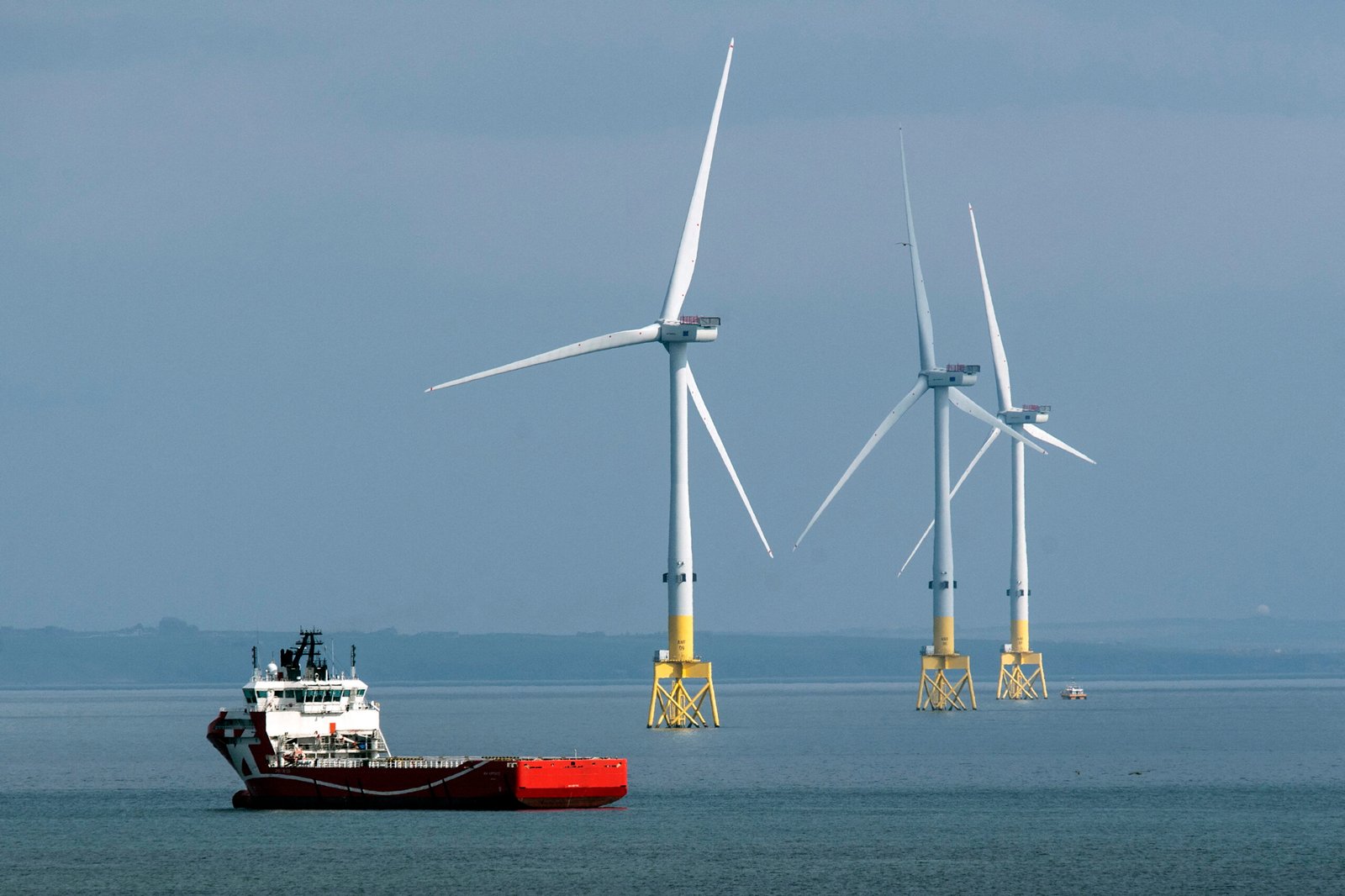
Labour’s pledge to work alongside the private sector to seek increased investment in the green economy is crucial, in order to keep its promise of doubling onshore wind, tripling solar power and quadrupling offshore wind by 2030, while ramping up investment in carbon capture and storage as well as hydrogen energy.
“Historically, Labour governments have been viewed negatively for the private sector as they have been associated with higher taxes. However, this Labour party has been clear on its intention to work alongside the private sector to achieve sustainability objectives and create necessary conditions to enable private investment,” Mr Thul says.
The decision to cap corporate tax at the current 25 per cent is evidence of this more pro-business approach. “The first year of the Starmer administration will probably give an idea on how quick Labour will move in this matter,” Mr Thul adds. At this stage, he says, it is difficult to assess whether a Labour government will be more efficient at tacking the net-zero agenda than previous Conservative administrations.
Power from wind and waves
Seb Beloe, head of research at impact investing boutique firm WHEB Asset Management, believes that “in terms of investment strategies, we can expect sectors related to clean energy and infrastructure to experience a boost based on Labour’s pledged policies.”
Private enterprise is key in developing and deploying solutions critical to social and environmental challenges, he adds, but governments play an important role in giving clear direction and providing policy support to encourage private enterprise to play this role.
An “easy first step” in proving Labour’s commitment to becoming a net-zero economy “is to make good on its manifesto promise to reverse the Tory decision to prevent the Bank of England giving due consideration to climate change in its mandates,” Mr Beloe notes.
Foresight Solar Fund Limited’s fund manager Ross Driver welcomes Labour’s plans to harness Britain’s sun, wind and wave power to make consumers’ bills cheaper and ensure the UK’s energy independence.
However, he calls on the new government “to be attuned to the potential headwinds that could stall these plans, to listen to the concerns of renewable infrastructure providers and ensure a clear, stable and internationally competitive method for electricity pricing. “Policy consistency would go a long way to help grow renewable capacity.”
Sustainability has been rising among political electorates’ priorities over time, “so it is paramount that [Starmer] outlines what shade of green his future government will look like,” says Paul Hamalainen, director RegCentre, and sustainable expert at international professional services firm Forvis Mazars.

“What businesses fundamentally need, and expect, is certainty, so they can plan, adapt, and align with both UK and global net-zero standards and take advantage of the investing opportunities that the green transition creates,” he says.
“In an already crowded field of policy and regulation, a clear pathway that incentivises capital to find its way to UK-based purposeful impact projects would certainly start shifting the sustainability dial.”
One way in which the new government could create a clear sustainability message is to emulate the US and introduce a “substantial package of funding and incentives that will accelerate the transition to a clean energy economy,” says Mr Hamalainen. “Green investment and growth require blended funding, and the UK has a renowned financial centre that can channel the much-needed private capital required alongside the public sector incentives.”
Reducing Russian reliance
The amount of money allocated to infrastructure in Labour’s manifesto may sound high at £1bn to £2bn, but it is “relatively small” in the context of the UK’s energy transition needs, warns Adam MacDonald, managing director and infrastructure expert at London-based international corporate finance firm Centrus.
“This is not just a ‘nice to have’,” he says. “Investment into energy transitions and infrastructure will help mitigate potential price shocks, reduce reliance on Russian gas, and stimulate economic growth, similar to impact of the US inflation Reduction Act,” he adds.
“In the next 100 days, we want to see decisive actions and clear commitments from the new Labour government regarding the energy transition.”
This includes a “clear, robust policy framework” that supports development and integration of renewable energy sources and encourages private sector investment. Infrastructure development is also needed to fast-track those projects deemed essential for energy transition, including grid upgrades and energy storage solutions.
Incentives for innovation are also vital, he adds, calling for introduction of incentives for private enterprise to invest in new areas such as carbon capture and utilisation and hydrogen, while fostering advancements in technology and efficiency.
Future competitiveness of the UK is “strongly linked” to its net-zero agenda, says Rathbones’s spokesperson. “This transition to a green economy offers a substantial opportunity for economic growth, job creation and energy security,” he says. “Pursuing an ambitious net-zero goal can help the UK become a leader in the clean energy sector, driving innovation and attracting investment. This commitment also addresses the current cost-of-living crisis by aiming to lower energy bills through renewable energy sources.”