
[ad_1]
A decade ago, Latin America’s criminal groups were starting to experiment with cryptocurrency, but in 2025, they went all in. From an unprecedented bank heist to nearly untraceable money laundering techniques, virtual currencies went mainstream. And as the amount of cocaine trafficked around the globe exploded, rigid criminal organizations have been replaced by loose, modular networks that invest in innovation and technology. In this new criminal underworld, the use of cryptocurrency is only going to keep growing.
The very nature of cryptocurrency makes it appealing for major criminal transactions, where cash has traditionally been the preferred method due to its anonymity. Cryptocurrencies weigh nothing and take up no physical space, solving two major problems with bulk cash transfers. Payments can be made without having to be physically present — a big advantage in criminal industries like the cocaine trade, in which billions are made shipping Andean cocaine to all corners of the globe.
And while mainstream coins, such as bitcoin, record every transaction on a public ledger called the blockchain, who is behind those transactions is anonymous. Some countries, like Brazil and Chile, have tried to crack down by bringing cryptocurrencies into their banking systems and instituting “know-your-customer” (KYC) laws, which require institutions to verify who is behind an account before someone can start trading cryptocurrency. But many countries in the region are behind on this, and even existing regulations can often be skirted by creative criminals.

Bank Heists From Your Bedroom
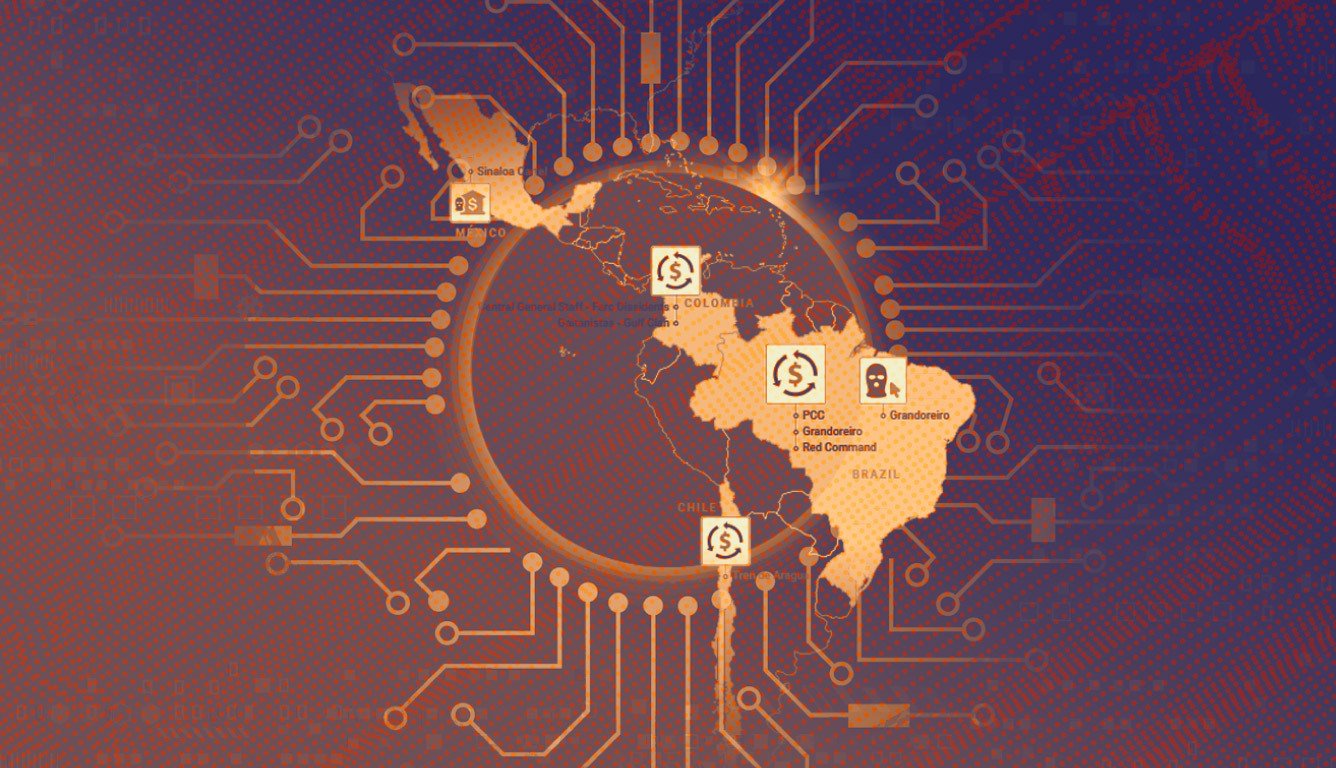
The largest known robbery of a Brazilian financial institution took place in July 2025 after cyberattackers stole $150 million without having to step foot in a bank. Exploiting a flaw in Pix, Brazil’s electronic payment system, the group drained the funds and then converted the money to cryptocurrency to try to hide the trail. The robbers worked internationally, with suspects arrested in Argentina, Portugal, and Spain, in addition to 11 states in Brazil. Those at the head of the group, however, are still at large.
The Brazil-based cybercrime network Grandoreiro, which first appeared around 2016, sent malicious extensions to the victims that later allowed them to steal credentials and log into their bank accounts. When several arrests were made in Argentina in 2025, authorities were able to piece together the modus operandi. The group used local accounts to do normal bank transfers before buying and selling cryptocurrency to break up the trail. The bulk of the cryptocurrency was eventually transferred to a server in Brazil.
SEE ALSO: Borders Are No Barrier to Booming Cyber Crime, and Authorities Must Adapt
Cases like these show how Brazil’s digital criminal economy saw an unprecedented expansion in 2025, with the emergence of specialized cyber gangs using malware to invade and steal bank accounts or converting funds into cryptocurrencies to disguise the money trails of massive digital heists.
Taking advantage of the anonymity provided by the blockchain and the ease of digital transactions, wiring funds through various accounts has become a rising criminal method.
The Old Meets the New
Not to be outdone by new cyber players, Latin America’s trafficking groups embraced cryptocurrency to launder drug money across their networks. While hiding profits from drugs and arms trafficking through the old-school method of using shell companies, they increased the obscurity of that process by using techniques such as cryptocurrency blenders.
Brazil’s main criminal groups, as well as specialized cybergangs such as Grandoreiro, have also embraced cryptocurrency. The First Capital Command (Primeiro Comando da Capital – PCC) and the Red Command (Comando Vermelho) began as prison gangs and bank robbers. But over the past decade, they moved into cocaine trafficking, which caused their profits and power to surge.
While maintaining their traditional activities, both gangs constantly search for new ways to expand their criminal portfolio. And even though they are rivals, the groups allegedly cooperated last year to launder around $1.1 billion using the PCC’s digital banking system.
The trend of old-school crime groups embracing new laundering techniques goes beyond Brazil. In Mexico, cryptocurrencies are now the preferred payment method in the precursor chemical supply chain, especially for fentanyl pre-precursor transactions. Authorities seized $5.5 million from a network related to Mexican networks that used cryptocurrency to pay Chinese suppliers in May 2025.
Other Criminal Markets
Several events in 2025 suggest the use of cryptocurrency has expanded beyond drug trafficking.
In Chile, authorities dismantled a network linked to Tren de Aragua that helped launder more than $13 million via cryptocurrency. The organization used a sophisticated system that converted illicit funds to digital assets and transferred them internationally through cryptocurrency brokers to conceal their origins. Criminals were able to hide profits from what police and prosecutors termed “criminal taxes,” derived from extortion, drug trafficking, sexual exploitation, migrant smuggling, and kidnappings.
SEE ALSO: Kidnapping Data for Ransom Is a Booming Business in Brazil
In Brazil, the country’s Federal Police dismantled a network that used shell companies and front partners to import electronics without paying taxes and then sold them via a major e-commerce platform. The proceeds were then laundered through cryptocurrency assets. The September 2025 operation found that one of the operators laundered over $190 million in just over a year through cryptocurrency exchanges.
Besides that, a $10 million seizure of cryptocurrency assets made by the US Drug Enforcement Administration (DEA) in July 2025 and linked to the Sinaloa Cartel showed that traditional Mexican criminal organizations are also taking advantage of digital assets to operate.
Organized Crime Is Winning the Cryptocurrency Arms Race
Some countries in the region implemented new measures to tackle cybercrime. But law enforcement is struggling to keep pace with criminal organizations in Latin America and the Caribbean.
Governments have scrambled to regulate the new digital Wild West of online payments via increased traceability and know-your-customer laws, which are designed to protect financial institutions from money laundering, corruption, and fraud.
In 2025, Brazil improved its regulations around the traceability of funds handled by financial technology companies. New procedures required digital banks to follow the same process as traditional banks and report suspicious transactions to the country’s financial institutions.
SEE ALSO: Cryptocurrency Money Laundering Is on the Rise in Brazil
Chile has also invested in its anti-money laundering fight. From July 2025, bitcoin transactions over $1,000 were not permitted to be done anonymously as authorities started demanding cryptocurrency platforms identify the transmitters and receivers of these operations. A new structure was set to enforce the rule using recording, alert, and verification systems to control the movement of funds. The initiative reduced the anonymity of digital transactions, increasing their traceability and facilitating the identification of suspicious trades.
Despite relevant advances, the common scourge of corruption and a dearth of specialized investigative capacity and resources for enforcement have made clamping down on illegal cryptocurrency elusive for many governments. Cryptocurrencies are often traded across borders and in seconds. And the use of tumblers, which are services that mix cryptocurrency while it goes from the buyer to the receiver, increases the difficulty of identifying the trail and makes it even harder to follow the origin of funds.
Many governments already struggle to detect traditional money laundering, and even with specialized training to tackle cybercrime, cryptocurrencies are constantly evolving, meaning that combatting methods soon become obsolete.
Organized crime is winning the cryptocurrency arms race, and 2026 will likely see this continue—unless law enforcement can find a way to catch up to the ever mutating digital criminal landscape.
In this year’s event, we’re looking back at the last year and the last decade to better understand what’s to come in 2026. Our donor-exclusive event will brief you on the most important criminal shifts in the region and what to expect in the coming year from organized crime and the governments tackling it in the Americas.

[ad_2]
Source link