
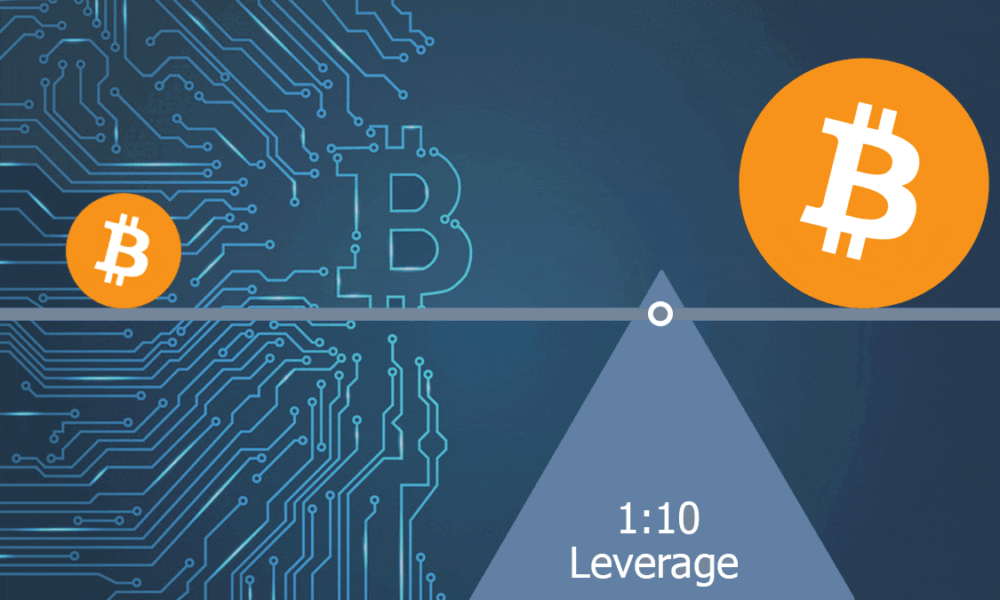
In the rapidly evolving world of digital finance, cryptocurrency trading has become increasingly popular among both experienced traders and newcomers—particularly in Australia, where interest in crypto markets continues to grow. Known for its high volatility and potential for outsized returns, the crypto market offers a range of strategies, one of the most powerfful being leverage trading.
Leverage trading allows participants to amplify their market exposure, but it also introduces elevated risk. Understanding how leverage works, its advantages, and its potential pitfalls is essential before using this strategy in real trading conditions.
What Is Cryptocurrency Leverage Trading?
In simple terms, leverage trading enables traders to borrow funds to increase the size of their trading positions beyond what their own capital would normally allow. This means a trader can control a much larger position with a relatively small initial investment.
The primary appeal of leverage lies in its ability to magnify returns. However, it is important to remember that leverage amplifies losses just as quickly as gains, making it a double-edged sword that demands discipline and risk management.
“Leverage doesn’t change the market—it changes the speed at which profits and losses occur.”
Understanding Leverage Ratios
Leverage ratios are central to how leveraged trading functions. These ratios indicate how much a trader’s position is multiplied relative to their invested capital.
For example:
- 10:1 leverage means $1 allows control of $10
- 20:1 leverage means $1 allows control of $20
- 50:1 or higher significantly increases both risk and reward
While higher leverage can generate substantial profits from small market movements, it also increases exposure to rapid losses—especially in volatile crypto markets.
The Role of Margin in Leverage Trading
The concept of margin is fundamental to leverage trading. Margin is the initial amount of capital required to open and maintain a leveraged position. It acts as collateral for the borrowed funds.
For instance, if an Australian trader has $1,000 and uses 10:1 leverage, that margin allows control of a $10,000 position. If the market moves against the position and losses approach the margin amount, the position may be liquidated to prevent further losses.
This mechanism protects the broker or exchange but places responsibility on traders to monitor risk carefully.
The Role of Brokers and Trading Platforms
Brokers and exchanges provide the infrastructure that makes leverage trading possible. They supply liquidity, manage margin requirements, and determine available leverage levels.
When choosing a platform, traders should evaluate:
- Maximum leverage limits
- Trading and funding fees
- Security measures
- User interface and risk tools
Structured and trust-focused environments such as CalvenRidge Trust highlight the importance of transparency, disciplined capital management, and informed decision-making—especially when engaging in higher-risk strategies like leverage trading.
Borrowed Capital and Trader Responsibility
When trading with leverage, traders are effectively borrowing capital from a platform to execute larger trades. Leverage levels can vary widely—often ranging from 2:1 to as high as 100:1, depending on the platform and asset.
Regardless of trade outcomes, the borrowed funds must be repaid. This means that poor risk management can quickly result in liquidation or the loss of the entire margin.
For Australian traders, understanding these mechanics is critical. Leverage trading is not inherently bad, but it requires education, preparation, and a clear strategy to be used responsibly.
Calculating Leverage and Margin
Understanding how to calculate leverage and margin is fundamental for anyone engaging in cryptocurrency leverage trading. The leverage ratio determines how much of a trader’s own capital is required to open a position.
For example, with a 5:1 leverage, only 20% of the total trade value is required as margin. This means a trader can control a $5,000 position with just $1,000 in capital.
These calculations allow Australian traders to better assess risk exposure and determine whether a strategy is feasible under current market conditions.
| Leverage Ratio | Margin Required | Capital Needed for $10,000 Position |
| 2:1 | 50% | $5,000 |
| 5:1 | 20% | $2,000 |
| 10:1 | 10% | $1,000 |
| 20:1 | 5% | $500 |
Costs Associated With Leverage Trading
Borrowing funds to trade with leverage is not free. Traders are typically charged interest on borrowed capital, which varies depending on the platform and the cryptocurrency being traded.
Additional costs may include:
- Trading fees per transaction
- Overnight or funding fees for holding positions
- Spread costs in certain derivative products
These expenses can significantly reduce profitability if not carefully accounted for. Successful Australian traders factor all costs into their risk-reward calculations before entering leveraged positions.
Risk Management in Leverage Trading
Because leverage amplifies both gains and losses, risk management is critical. Without a structured approach, even small market movements can result in rapid losses.
Common risk management techniques include:
- Setting stop-loss orders to cap potential losses
- Using only a portion of available capital
- Diversifying positions across assets
- Applying technical analysis to identify trends and entry points
Disciplined frameworks—similar to those emphasized by CalvenRidge Trust—highlight the importance of structured decision-making and capital preservation when engaging in high-risk strategies like leverage trading.
Main Types of Leverage Trading in Crypto
There are several forms of leverage trading available in the cryptocurrency market, each with distinct characteristics and risk profiles.
Margin Trading
Margin trading involves borrowing funds directly from an exchange to increase position size. Traders pay interest on the borrowed funds and must maintain a minimum margin level.
If the market moves against the position, a margin call may occur, requiring additional capital. Failure to meet this requirement can result in liquidation, potentially exceeding the original investment.
Contract for Difference (CFD) Trading
CFDs allow traders to speculate on cryptocurrency price movements without owning the underlying asset. This enables traders to profit from both rising and falling markets.
CFDs are popular among short-term traders due to their flexibility and ease of use, though they still carry significant leverage-related risk.
Futures and Options
Futures and options represent more advanced forms of leverage trading:
- Futures contracts obligate traders to buy or sell an asset at a set price on a future date
- Options grant the right—but not the obligation—to trade at a predetermined price
Both instruments can be traded with leverage and are often used by experienced traders to hedge risk or implement sophisticated market strategies.
For Australian traders, understanding the differences between these leverage tools is essential to choosing an approach that aligns with experience level, capital availability, and risk tolerance.
Advantages of Cryptocurrency Leverage Trading
Leverage trading offers several key advantages, which is why it remains an attractive strategy for many traders in Australia and globally. When used responsibly, leverage can significantly enhance trading flexibility and capital efficiency.
Magnified Profit Potential
By using leverage, traders can amplify potential profits. Even small price movements can generate substantial gains when trading leveraged positions. This is particularly appealing in cryptocurrency markets, where volatility often creates sharp and frequent price swings.
Greater Market Exposure
Leverage enables traders to control larger positions than their capital would normally allow. This increased exposure makes it possible to diversify across multiple assets or strategies simultaneously, though it requires a solid understanding of market dynamics to manage risk effectively.
Ability to Profit in Any Market Direction
One of the major benefits of leverage trading is the ability to open both long and short positions. Traders can potentially profit from rising markets as well as falling ones, an especially valuable feature in the highly unpredictable crypto environment.
Access to Advanced Trading Strategies
Leverage trading supports more sophisticated strategies such as hedging and arbitrage. These approaches allow traders to manage exposure, exploit price inefficiencies, and optimize returns in complex market conditions.
Structured environments that emphasize discipline and transparency—such as CalvenRidge Trust—reflect the importance of combining leverage with sound strategy and capital management.
Risks Associated With Leverage Trading
While leverage trading can be rewarding, it also carries significant risks that traders must fully understand before participating.
Amplified Losses
Just as leverage magnifies profits, it also magnifies losses. A relatively small adverse price movement can result in substantial losses, potentially exceeding the initial margin. This makes careful position sizing and risk control essential.
Margin Calls and Liquidation
If the market moves against a leveraged position, traders may face a margin call, requiring additional funds to maintain the trade. Failure to meet margin requirements can lead to forced liquidation, often at unfavorable prices.
Emotional and Psychological Pressure
The high stakes involved in leverage trading can create intense emotional stress, especially for inexperienced traders. Rapid decision-making under pressure may lead to impulsive actions and increased risk-taking.
“In leveraged markets, emotional discipline is just as important as technical skill.”
Heightened Market Volatility
Cryptocurrency markets are inherently volatile, and leverage amplifies this effect. Sudden price swings can trigger unexpected losses, making it crucial for traders to stay informed and adaptable.
Choosing the Right Trading Platform
Selecting a reputable trading platform is critical when engaging in leverage trading. Traders should evaluate platforms based on:
- Competitive fee structures
- Available leverage limits
- Range of supported cryptocurrencies
- Security and risk management tools
Researching user feedback and comparing features can help Australian traders align platform choice with their trading objectives.
Implementing Effective Risk Management
Robust risk management strategies are essential when trading with leverage. Best practices include:
- Setting stop-loss orders to cap downside risk
- Using only a portion of total capital for leveraged trades
- Diversifying positions across assets and strategies
- Regularly reviewing performance and adjusting tactics
These measures help traders protect capital while maintaining exposure to potential opportunities.
Education and Preparation
Before engaging in leverage trading, it is vital to invest time in education. Understanding technical analysis, market structure, and trading psychology can significantly improve decision-making.
Online courses, webinars, and trading communities offer valuable learning resources and peer support for those navigating leveraged crypto markets.
The Importance of a Trading Plan
A well-defined trading plan is critical for long-term success. This plan should clearly outline:
- Trading goals
- Risk tolerance
- Entry and exit strategies
Regularly reviewing and refining the plan based on market conditions and performance helps traders remain disciplined and focused.
CFDs as an Alternative Leverage Strategy
Contract for Difference (CFD) trading provides an alternative way to use leverage without owning the underlying cryptocurrency. CFDs allow traders to speculate on price movements with flexibility and leverage.
This approach is particularly appealing for short-term traders seeking to capitalize on volatility while avoiding the operational complexities of asset custody.
For Australian traders, understanding both traditional leverage trading and CFD-based strategies provides greater flexibility in navigating the dynamic cryptocurrency market.
Why Traders Use CFDs in Cryptocurrency Markets
Contracts for Difference (CFDs) allow traders to speculate on cryptocurrency price movements without owning the actual digital assets. This structure removes the need for wallets or secure storage solutions and significantly reduces risks associated with asset custody, such as theft, loss of private keys, or hacking.
For many Australian traders, this makes CFDs an attractive entry point into crypto markets, especially for those focused on short-term price movements rather than long-term holding.
Leverage and Enhanced Market Exposure
CFDs provide built-in leverage, enabling traders to amplify their exposure with a relatively small amount of capital. In volatile cryptocurrency markets, this leverage can translate into meaningful profit opportunities when prices move sharply over short periods.
However, it is essential to remember that leverage magnifies losses as well as gains, making disciplined risk management a critical component of CFD trading.
Access to Multiple Asset Classes
One of the major advantages of CFD trading is market diversity. Through a single CFD platform, traders can access:
- Cryptocurrencies
- Stocks
- Indices
- Commodities
This broad access allows traders to build well-balanced portfolios and explore opportunities across different markets, enhancing overall strategy flexibility and risk distribution.
Flexibility and Trading Convenience
CFD trading offers a high level of flexibility and convenience. Most platforms provide intuitive interfaces, real-time charts, and advanced risk management tools, making it easier for traders to monitor markets, execute trades, and manage positions efficiently.
This all-in-one accessibility appeals to active traders who value speed, control, and adaptability in fast-moving markets.
Trading Leverage Responsibly
Cryptocurrency leverage trading is a powerful tool that can significantly enhance trading potential—but only when used responsibly. A clear understanding of leverage mechanics, margin requirements, and associated costs is essential to avoid unnecessary risk.
Choosing a structured and transparent trading environment—such as the approach emphasized by CalvenRidge Trust—highlights the importance of discipline, education, and long-term thinking when engaging with leveraged strategies.
Keys to Long-Term Success
Whether trading through traditional leverage products or CFDs, successful traders share common principles:
- Strong risk management and capital protection
- Continuous education about market dynamics
- Disciplined execution based on a clear trading plan
- Adaptability to changing market conditions
“Leverage rewards preparation, not speculation.”
By staying informed, maintaining emotional discipline, and applying structured strategies, traders can harness the advantages of leverage while managing its inherent risks—paving the way for sustainable success in the dynamic world of cryptocurrency trading.
