
[ad_1]
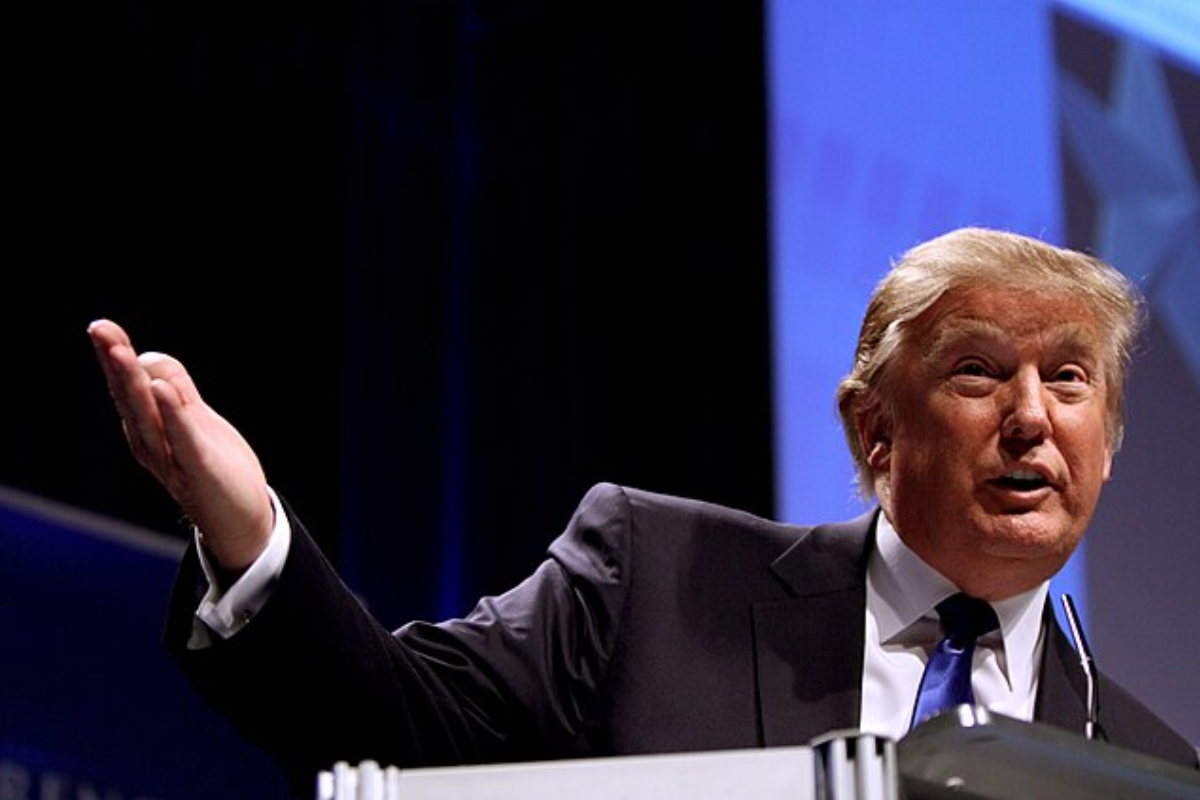
While his administration was dismantling the main federal agency that oversaw the banks, President Donald Trump was quietly buying securities issued by those same banks and did not disclose the purchases to the public for several months.
Federal ethics disclosures published on March 4, 2026 reveal that Trump made more than 170 separate investment purchases between May and November 2025, the vast majority of them in securities tied to major financial institutions. The transactions, disclosed in a series of late OGE Form 278-T periodic transaction reports filed with the US Office of Government Ethics, were submitted well after the legally required reporting window, with the government’s own filings noting the notifications were ‘received over 30 days ago’ and that Trump paid late filing fees.
Adding together the upper end of the value ranges disclosed in the filings suggests the total investment could exceed £15.5 million ($20 million). The disclosures were first reported by Sludge, an investigative outlet focused on money in politics.
What the Filing Shows
Under federal law, senior executive branch officials are required to disclose securities transactions exceeding £775 ($1,000) within 30 days of receiving notification of the trade, and no later than 45 days after the transaction itself. The OGE Form 278-T is the standard form for periodic transaction reporting. Transaction values are disclosed only in broad ranges, for example, £775–£11,600 ($1,001–$15,000) or £775,000–£3.9 million ($1,000,001–$5,000,000), which makes precise totalling impossible. The upper bound calculation of over £15.5 million ($20 million) represents the maximum possible aggregate, not a confirmed figure.
The publicly available October 2025 filing, reviewed directly for this article, lists purchases in bonds and debt instruments issued by Goldman Sachs, JPMorgan Chase, Morgan Stanley, Wells Fargo, Bank of America and Citigroup, among others. Non-bank purchases in that filing include securities from Meta Platforms, Broadcom, Boeing, UnitedHealth Group, Comcast, Qualcomm, and BP Capital Markets.

A number of the transactions are flagged as ‘Yes’ under the ‘Notification Received Over 30 Days Ago’ column, meaning they were already overdue even at the point of submission. The notation ‘Filer paid late fees’ appears explicitly on at least one separate 278-T filing from August 2025, also publicly accessible through the OGE’s presidential disclosures index.
The securities Trump purchased include corporate bonds, preferred shares and variable-rate notes. Most pay fixed or variable income rather than tracking a company’s share price. Banks issue these instruments to raise capital and satisfy regulatory requirements. Yields on bank-issued preferred shares and subordinated debt typically range from 3 to over 8 per cent annually, making them attractive for income generation — and also making their value sensitive to whatever regulatory environment the issuing bank operates in.
Trump’s Administration Dismantled the Banks’ Regulator
The Consumer Financial Protection Bureau, the federal agency created by the Dodd‑Frank Act of 2010 to oversee consumer financial products, penalise abusive practices and supervise major banks, was being systematically dismantled during the same period that Trump was building his bank security portfolio.
Within days of taking office in January 2025, Trump’s acting CFPB director Russell Vought closed the agency’s Washington headquarters and ordered all staff to stop work. The CFPB’s social media accounts were deleted. DOGE, the efficiency unit run by Elon Musk, accessed the agency’s internal computer systems. Staff were reduced from roughly 1,700 under Biden to fewer than 200, a cut so severe that it triggered multiple legal challenges.
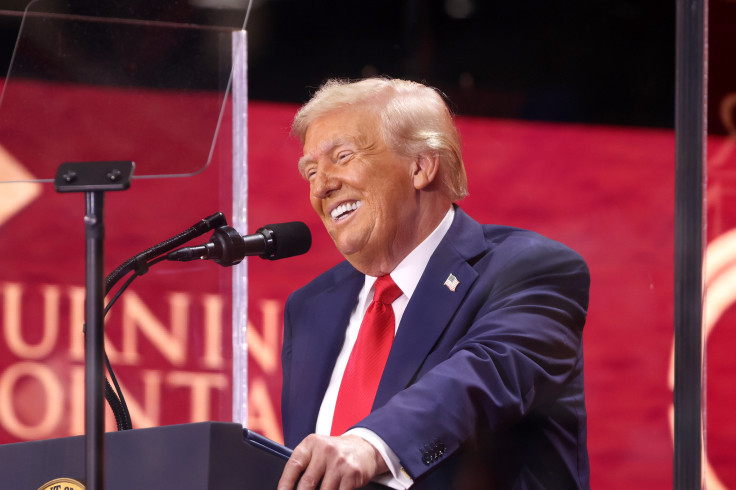
In May 2025, Congress repealed the CFPB’s overdraft fee rule, which had proposed capping fees at £3.90 ($5) for large banks, through the Congressional Review Act, a move Trump signed into law. Banks currently charge an average of £20.70 ($26.77) per overdraft transaction, according to Bankrate data. Consumers paid an estimated £9.4 billion ($12.1 billion) in overdraft and non-sufficient funds fees in 2024 alone.
In March 2025, the CFPB dropped its December 2024 lawsuit against JPMorgan Chase, Wells Fargo and Bank of America over alleged failures to protect consumers from fraud on the Zelle payment platform. The CFPB had also dropped a separate lawsuit against Capital One.
In July 2025, Trump signed the ‘One Big Beautiful Bill Act,’ which cut the CFPB’s statutory funding cap from 12% to 6.5% of the Federal Reserve’s 2009 operating expenses, effectively halving the maximum funding available to the agency. A January 2026 GAO report described the scale of the transformation as ‘staggering,’ noting that core divisions including Supervision, Enforcement, and Research had been reduced to a fraction of their previous staffing.
The banks that Trump invested in were among the direct beneficiaries of this deregulatory campaign. JPMorgan Chase, Wells Fargo and Bank of America had each faced active federal lawsuits that were subsequently dropped. Goldman Sachs and Morgan Stanley both operate in markets where CFPB oversight had been a meaningful compliance cost. Bloomberg Law reported that a Trump executive order in August 2025 also required banking regulators to remove ‘reputation risk’ from their supervisory guidance, a measure the American Bankers Association had lobbied for specifically.
The Legal Gap
The Ethics in Government Act of 1978 and its amendments require executive branch officials to file public financial disclosures. However, sitting presidents are largely exempt from the conflict-of-interest provisions contained in 18 U.S.C. § 208, which prohibit federal employees from participating in matters affecting their personal financial interests. That statutory exemption is why Trump is legally permitted to hold securities in companies directly affected by his administration’s decisions, something no other senior official in his government could do.
The Office of Government Ethics (OGE) has no power to sanction a sitting president for late filing beyond the fee mechanism already triggered in this case. The agency can flag discrepancies and notify the Department of Justice, but prosecution of a sitting president for ethics violations has no modern precedent. The OGE did write a letter to the DOJ during Trump’s first term regarding his financial disclosure report, noting concerns, but no action was taken.
Walter Shaub, the former director of the OGE who resigned in 2017 in protest over the Trump administration’s approach to ethics rules, told Sludge that the pattern of late filings and bank investments while policy decisions benefited those same banks represented ‘the kind of corruption that the ethics laws were designed to prevent,’ even if those laws ultimately do not reach a president. The White House did not respond to Sludge’s request for comment before publication.
Donald Trump did not need to hide the trades; the law that would have made them a conflict of interest is the same law that exempts him from it.
[ad_2]
Source link